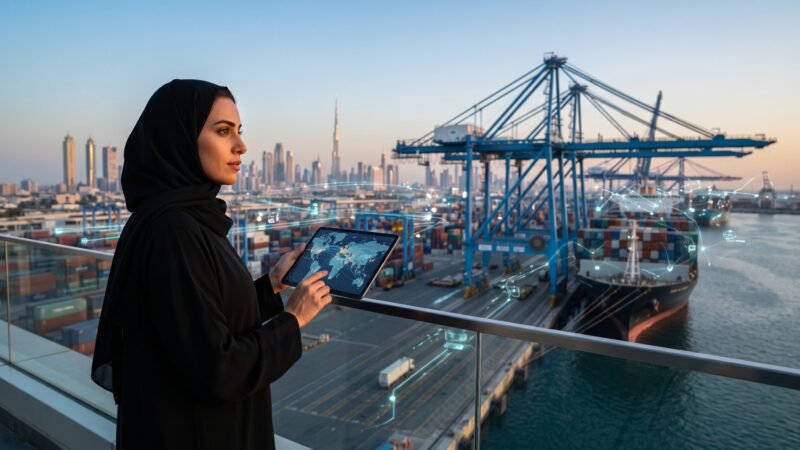
The Gulf sits at the crossroads of global trade — a natural bridge between Asia, Europe and Africa. Its ports and logistics networks have made the GCC one of the world’s most important trade corridors, handling everything from oil and gas to consumer goods, food and e-commerce.
The Region’s Key Ports
- Jebel Ali (Dubai) — one of the world’s busiest container ports and the anchor of Dubai’s JAFZA free zone.
- Khalifa Port (Abu Dhabi) — a deep-water hub and gateway for the UAE capital.
- Hamad Port (Qatar) — Qatar’s main commercial port and the centrepiece of its logistics strategy.
- King Abdulaziz Port (Dammam) and Jeddah Islamic Port (Saudi Arabia) — the Kingdom’s Red Sea and Gulf gateways, critical to Vision 2030 trade growth.
- Salalah and Duqm (Oman) — strategic ports on the Arabian Sea serving as transhipment and industrial hubs.
Why the Gulf Is a Logistics Powerhouse
Three factors set the Gulf apart: geography (at the midpoint of East–West shipping routes), infrastructure (world-class ports, airports and free zones) and policy (free zones, customs efficiencies and trade agreements). Emirates, Qatar Airways and Etihad also provide unmatched air-cargo connectivity.
Emerging Trends
- Rail connectivity — the UAE’s Etihad Rail and the planned GCC railway will link ports to inland logistics hubs.
- E-commerce logistics — rapid growth in last-mile delivery and fulfilment centres across the region.
- Digital trade — blockchain-based customs clearance and single-window systems are streamlining cross-border trade.
- Food security — the Gulf is investing heavily in food storage and re-export infrastructure.
Opportunities for Business
The trade and logistics sector offers opportunities in freight forwarding, warehousing and 3PL services, cold-chain logistics, e-commerce fulfilment, and supply-chain technology. As the region pushes to diversify and re-export to Africa and Central Asia, the logistics sector is positioned for sustained growth.
Conclusion
The GCC is not just a consumer market — it is a global trade hub. Businesses that understand the region’s ports, free zones and logistics networks can tap into a corridor that moves goods across three continents.