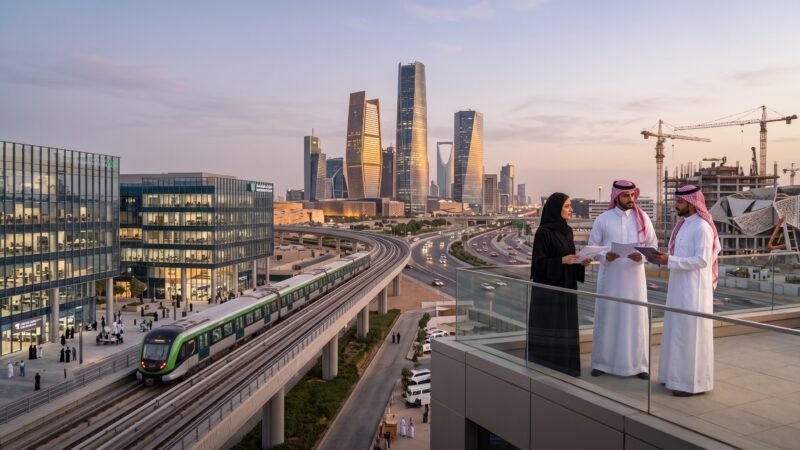
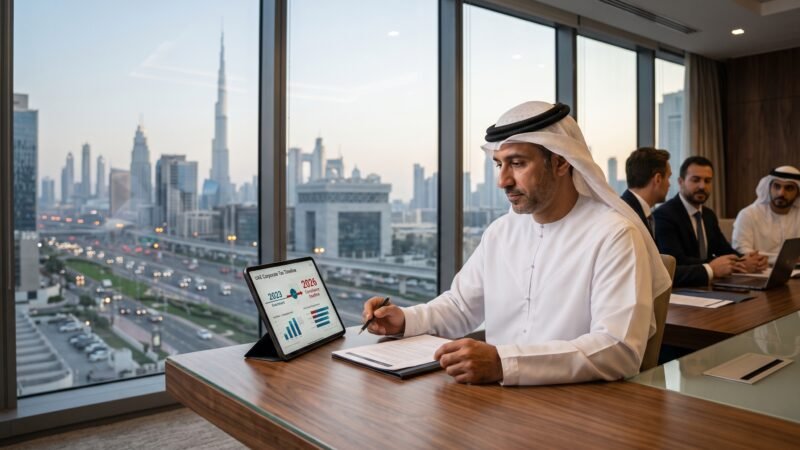
By the midpoint of 2026, the narrative surrounding Artificial Intelligence in the Gulf Cooperation Council (GCC) has moved decisively past the “hype cycle.” What was once a series of ambitious pilot programs and high-level vision statements has solidified into the primary engine of the region’s post-oil diversification. From the automated logistics hubs in Jebel Ali to the predictive healthcare systems in Riyadh, AI is no longer a peripheral technology; it is the fundamental infrastructure upon which the modern GCC economy is being rebuilt.
The transformation is visible in the sheer scale of investment and the speed of adoption. Unlike previous technological shifts where the region was largely a consumer of Western or East Asian innovation, 2026 marks a period where the GCC—led by Saudi Arabia and the United Arab Emirates—is asserting itself as a global producer of AI solutions. This shift toward “Sovereign AI” is perhaps the most significant development in the regional tech landscape this decade.
The Rise of Sovereign AI and Localized Large Language Models
One of the most profound shifts in 2026 is the maturity of localized Large Language Models (LLMs). For years, regional businesses relied on adapted versions of Silicon Valley models. However, the unique linguistic nuances of the Arabic language, combined with the specific cultural and regulatory requirements of the Gulf, necessitated a homegrown approach.
The UAE’s early lead with models like Falcon and Jais has evolved into a sophisticated ecosystem where government entities and private enterprises now deploy “bespoke” AI. These models are not just translated; they are trained on regional data sets, understanding local dialects, legal frameworks, and business etiquette. In Saudi Arabia, the Saudi Data and AI Authority (SDAIA) has successfully integrated advanced AI into the “Tawakkalna” super-app ecosystem, moving beyond simple identity management into proactive citizen services and predictive urban planning.
This push for sovereignty is driven by a need for data security and strategic independence. By controlling the “compute” and the data, GCC nations are ensuring that their digital future is not entirely dependent on external providers. This has led to a massive surge in local data center construction, with significant investments from global players like Microsoft and Google, alongside local champions such as G42 and STC.
Energy and Industry: Efficiency in the Age of Intelligence
The energy sector remains the backbone of the GCC, but in 2026, it is an industry redefined by machine learning. National oil companies, including Saudi Aramco and ADNOC, have integrated AI across the entire value chain. This is not merely about increasing output; it is about “intelligent barrels”—minimizing carbon intensity and maximizing extraction efficiency.
Predictive maintenance has moved from a cost-saving measure to a standard operating procedure. AI sensors on offshore rigs and refineries now predict equipment failures weeks in advance, preventing costly downtime and environmental risks. Furthermore, AI is the “brain” behind the region’s massive transition to renewables. In Qatar and Oman, AI-driven grids are managing the intermittency of solar and wind power, ensuring that the shift toward green energy does not compromise grid stability.
In the manufacturing sector, particularly in Saudi Arabia’s industrial cities like Jubail and Yanbu, AI-driven automation is helping the Kingdom realize its “National Industrial Development and Logistics Program” (NIDLP) goals. Robotics and computer vision are being used to automate quality control in petrochemicals and minerals, allowing local firms to compete more effectively on a global stage.
Transforming Urban Living through Smart Infrastructure
The GCC has long been known for its ambitious urban projects, but in 2026, these projects have become living laboratories for AI. NEOM’s “The Line” and other giga-projects in Saudi Arabia are now testing autonomous transport systems that rely on real-time data fusion to manage traffic flow without human intervention.
In the UAE, the Dubai 2040 Urban Master Plan has integrated AI into the very fabric of the city’s utility management. Smart meters and AI-driven cooling systems are now standard in new developments, drastically reducing the energy consumption required for air conditioning—a critical factor in the region’s sustainability goals.
For the business owner or real estate developer, this means a shift in value. Properties are no longer judged solely on location, but on their “intelligence.” Buildings that can optimize their own energy use and provide seamless, AI-integrated security and maintenance services command a premium in the 2026 market.
The Labor Market: Upskilling and the New Expat Reality
The impact of AI on the GCC workforce is a complex issue that dominates policy discussions in 2026. There is a clear divide between routine administrative roles and high-value strategic positions. Automation has significantly reduced the need for entry-level clerical staff, particularly in the banking and insurance sectors of Kuwait and Bahrain.
However, this hasn’t necessarily led to a net loss of jobs. Instead, there is a frantic “war for talent” in AI engineering, data science, and ethical compliance. The UAE’s “Golden Visa” and Saudi Arabia’s “Premium Residency” programs have been specifically tuned to attract these specialists.
For the regional professional, the message is clear: AI literacy is no longer optional. Governments are heavily subsidizing upskilling programs for their citizens. In Saudi Arabia, the “Human Capability Development Program” is pushing AI education into schools and universities, aiming to create a generation of “AI-native” Saudis. For the expat workforce, the focus is shifting from providing basic labor to providing high-level technical expertise that AI cannot yet replicate.
The GCC Regulatory Landscape: A Competitive Advantage?
By 2026, the GCC has avoided the heavy-handed regulatory approach seen in some Western jurisdictions, opting instead for “innovation-friendly” frameworks. The UAE’s Ministry of AI and Saudi Arabia’s SDAIA have created regulatory sandboxes that allow startups to test AI applications in healthcare and finance with minimal bureaucratic friction.
Crucially, each country is carving out its own niche:
- Saudi Arabia: Focuses on large-scale industrial AI and national security applications.
- UAE: Positions itself as a global hub for AI startups and consumer-facing AI services.
- Qatar: Leads in AI for media, sports technology, and education, leveraging the legacy of the 2022 World Cup.
- Bahrain: Focuses on AI in Fintech, utilizing its mature financial regulatory environment.
- Oman and Kuwait: Are increasingly looking at AI for logistics and public sector efficiency.
This regulatory clarity is a major draw for foreign investors. When a tech company knows the rules of the road—particularly regarding data residency and algorithmic transparency—they are more likely to commit long-term capital to the region.
Opportunities for SMEs and the Startup Ecosystem
While the giga-projects grab the headlines, the most agile changes are happening in the SME sector. In 2026, AI has lowered the barrier to entry for many businesses. A small retailer in Muscat or a boutique consultancy in Manama can now use AI-driven marketing, inventory management, and customer service tools that were previously only available to multinational corporations.
Startups in the region are increasingly focusing on “B2B AI.” Rather than trying to build the next global social media platform, GCC entrepreneurs are building AI tools that solve regional problems—such as water desalination optimization, Arabic-first customer service bots, and Sharia-compliant AI financial advisors.
Venture capital in the region has matured. Investors in 2026 are less interested in “copy-paste” business models from the West. They are looking for “deep tech” startups that have proprietary algorithms or unique access to regional data sets. This has created a vibrant, though more disciplined, startup ecosystem.
Challenges and Risks: Compute, Water, and Ethics
The rapid adoption of AI in the GCC is not without its hurdles. The most pressing physical challenge is the “Compute-Water-Energy” nexus. AI requires massive data centers, which consume vast amounts of electricity and water for cooling—two resources that are precious in the Gulf. The region is currently leading in the development of “liquid cooling” technologies and solar-powered data centers to mitigate this environmental footprint.
Ethical considerations are also coming to the fore. As AI begins to make decisions about everything from bank loan approvals to medical diagnoses, the risk of algorithmic bias is being scrutinized. There is an ongoing debate in the region about how to ensure AI remains aligned with local cultural and religious values while still being globally competitive.
Furthermore, the “digital divide” is a risk. While large enterprises and government bodies are sprinting ahead, some smaller businesses risk being left behind, unable to afford the initial investment or the talent required to implement AI effectively.
What to Watch Next: The Road to 2027 and Beyond
As we look toward the end of 2026, several key trends will define the next phase of the GCC’s AI journey:
- Edge Computing: Look for more AI processing to happen locally on devices rather than in the cloud, particularly in the industrial and oil sectors.
- AI in Diplomacy: The GCC states may begin using AI for predictive geopolitics and trade negotiation modeling.
- The “Brain Drain” Reversal: Watch for more GCC nationals who studied and worked in Silicon Valley returning to Riyadh and Dubai to lead homegrown AI unicorns.
- Standardization: Expect more cross-border cooperation within the GCC to standardize AI regulations, making it easier for tech companies to scale across the entire region.
“The GCC is no longer just a consumer of technology; it is becoming a laboratory for the future of the global economy. In 2026, AI is the primary tool we are using to build that future.”
Conclusion
The reshaping of the GCC by artificial intelligence is a multifaceted process that touches every corner of the economy. For business owners and investors, the “wait and see” period is over. The competitive landscape of 2026 rewards those who have successfully integrated AI into their core operations and penalizes those who view it as a mere IT upgrade.
The primary takeaway for 2026 is that AI in the Gulf is becoming “sovereign, specialized, and ubiquitous.” Whether it is through the optimization of the world’s most efficient oil fields or the creation of the world’s most advanced smart cities, the GCC is proving that it can lead the global AI conversation. Professionals and businesses should focus on building AI literacy and seeking out regional niches where localized data and cultural understanding provide a moat against global competitors. The next eighteen months will likely see a further consolidation of these trends, as the region moves from building the infrastructure of AI to reaping its full economic rewards.