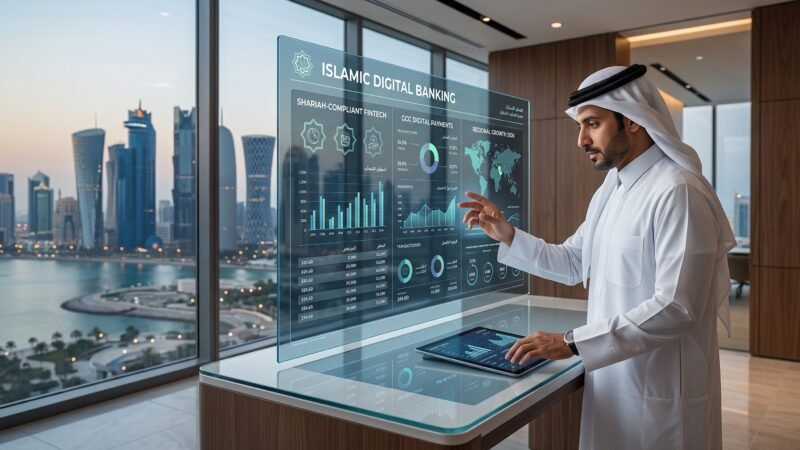
Islamic banking has grown from a niche alternative into a core pillar of the Gulf’s financial system. Built on Shariah principles that prohibit interest (riba) and speculative risk, it now accounts for a large share of banking assets in Saudi Arabia, Kuwait, Qatar and the UAE. Here is how it works.
The Core Principles
Islamic finance is governed by three key prohibitions: no interest (riba), no excessive uncertainty (gharar) and no investment in prohibited activities such as alcohol or gambling. Instead of lending money at interest, Islamic banks share risk and profit with their customers through structured contracts.
Common Islamic Finance Products
- Murabaha — the bank buys an asset and sells it to the customer at a marked-up price, paid in instalments (used for car and home financing).
- Ijara — a lease agreement where the bank owns the asset and rents it to the customer.
- Musharaka — a joint partnership where both parties contribute capital and share profits and losses.
- Mudaraba — one party provides capital, the other expertise; profits are shared per an agreed ratio.
- Sukuk — Shariah-compliant investment certificates (the Islamic equivalent of bonds) that represent ownership in an underlying asset.
Who Are the Major Players?
The GCC is home to the world’s leading Islamic banks, including Al Rajhi Bank (the largest Islamic bank globally), Dubai Islamic Bank, Qatar Islamic Bank and Kuwait Finance House. These institutions increasingly compete head-to-head with conventional banks for corporate and retail customers.
Why It’s Growing
Islamic banking is expanding for several reasons: a young, financially underserved population; government support for the sector; the growing appeal of sukuk as a funding tool for governments and corporates; and rising demand for ethical, asset-backed finance from both Muslim and non-Muslim clients. Fintech is also accelerating the trend, with Islamic digital banks and Shariah-compliant payment platforms emerging across the region.
The Bottom Line
For businesses and investors in the Gulf, understanding Islamic finance is no longer optional — it opens access to a large pool of capital, alternative funding structures and a fast-growing customer base. The sector’s emphasis on asset-backed, risk-sharing transactions also aligns well with a more conservative, sustainable approach to banking.