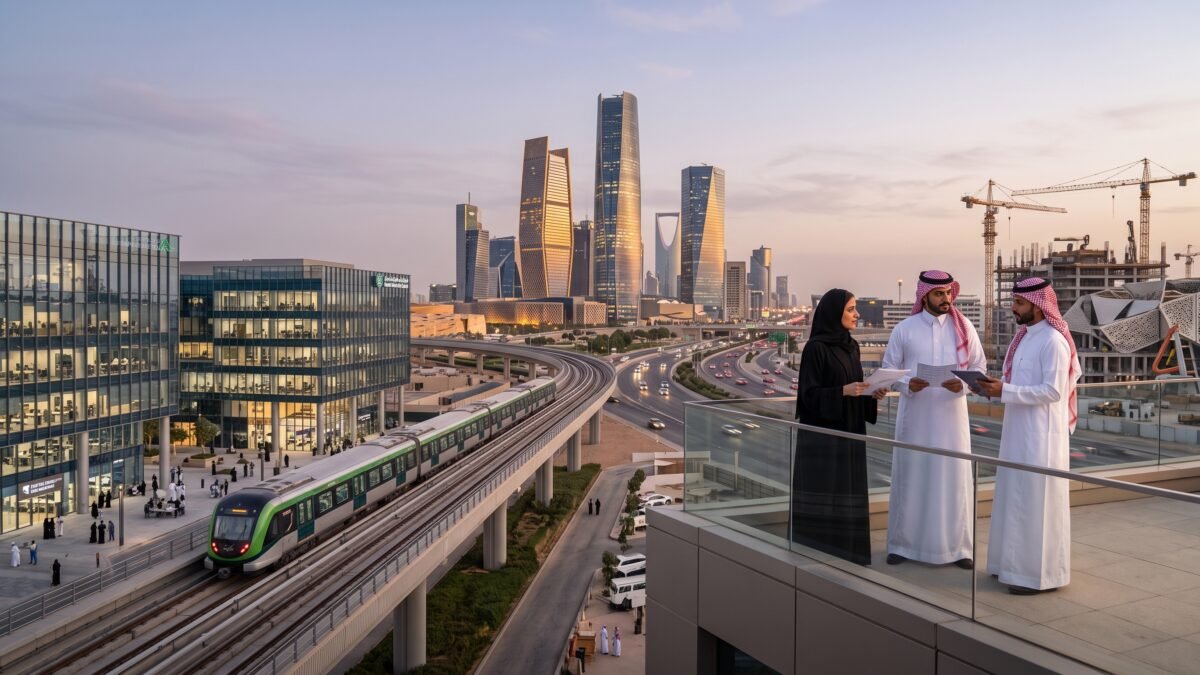
As we move through 2026, the economic narrative in Saudi Arabia has shifted from one of ambitious planning to one of operational execution. For the Kingdom, the reliance on crude oil exports—while still a significant budgetary component—is no longer the sole engine of growth. The “Vision 2030” framework has entered its final, critical stretch, and the results are visible in the skylines of Riyadh, the industrial zones of the Eastern Province, and the burgeoning tourism hubs along the Red Sea coast.
For business owners, regional investors, and global technology firms, 2026 represents a maturing market. The low-hanging fruit of the early transformation years has been picked, and the current landscape demands specialized expertise, local partnerships, and a deep understanding of the Kingdom’s regulatory evolution. From the rapid expansion of the mining sector to the sophisticated demands of a digital-first population, the non-oil economy is providing a diverse array of entry points for those willing to align with the Saudi national agenda.
This year, the focus for the GCC business community is not just on *if* Saudi Arabia can diversify, but *how* the private sector can capitalize on the massive infrastructure now coming online. With the Regional Headquarters (RHQ) program now firmly established, the competition for talent and market share between Riyadh, Dubai, and Doha has created a high-stakes environment that rewards agility and long-term commitment.
The Operational Phase of Saudi Tourism and Hospitality
In 2026, the Saudi tourism sector has moved beyond the “groundbreaking” ceremonies. Many of the flagship projects under Red Sea Global and the initial phases of NEOM’s luxury islands are now welcoming guests. This transition from construction to operations has birthed a secondary wave of business opportunities that extend far beyond hotel management.
Supply Chain and Logistics for Remote Destinations
The opening of high-end resorts in geographically isolated areas like the Al-Ula desert and the Red Sea archipelago has created a massive demand for specialized logistics. Businesses that can provide sustainable, temperature-controlled supply chains for food, beverage, and luxury retail are seeing unprecedented growth. There is a specific need for “last-mile” delivery solutions that respect the environmental mandates of these “giga-projects.”
The Mid-Market Gap
While much of the initial investment focused on the “ultra-luxury” segment, 2026 is seeing a pivot toward mid-market and “lifestyle” hotels. As the Kingdom aims to attract 150 million visitors annually by 2030, the domestic and regional traveler segments require high-quality, affordable accommodation. Developers and operators who can deliver “boutique” experiences at a 3-star and 4-star price point are finding a hungry market, particularly in secondary cities like Dammam, Abha, and Taif.
Religious Tourism 2.0
The expansion of the Two Holy Mosques and the streamlining of the Umrah visa process have transformed Makkah and Madinah into year-round hubs of economic activity. Beyond traditional hospitality, there are emerging opportunities in “PropTech” (Property Technology) to manage the massive influx of pilgrims, as well as specialized FinTech solutions for cross-border payments catering to the millions of international visitors.
Mining and Minerals: The “Third Pillar” of the Economy
If oil was the first pillar and petrochemicals the second, mining has officially become the third pillar of the Saudi economy by 2026. The Kingdom’s untapped mineral wealth—estimated at over $2.5 trillion—is being aggressively mapped and auctioned. This is not just about extraction; it is about the entire value chain.
Upstream and Midstream Opportunities
The Ministry of Industry and Mineral Resources has accelerated the issuance of exploration licenses. For GCC-based engineering firms and environmental consultancies, the opportunity lies in providing the technical expertise required for sustainable mining. The Kingdom is looking for technologies that minimize water usage—a critical factor in the Saudi desert—and carbon-neutral extraction methods.
Downstream Processing and Manufacturing
The real strategic goal for Saudi Arabia is to process these minerals domestically. We are seeing a rise in “Industrial Clusters” where raw phosphates, gold, copper, and bauxite are turned into semi-finished or finished products. For example, the growth of the electric vehicle (EV) industry in the Kingdom, led by Lucid Motors and the domestic brand Ceer, has created a direct demand for locally processed battery minerals.
- Gold and Base Metals: Increased exploration in the Arabian Shield.
- Phosphate Production: Saudi Arabia is now a global leader in fertilizer production, supporting global food security.
- Pharma-Grade Minerals: Opportunities in high-purity mineral processing for the healthcare sector.
The Digital Economy: Beyond Basic Digitalization
By 2026, Saudi Arabia has moved past basic digital transformation. The “Silicon Sands” are now a reality, with Riyadh serving as a central node for data centers and AI development in the Middle East. The focus has shifted toward Artificial Intelligence (AI), Gaming, and Cybersecurity.
The Rise of “Sovereign AI”
The Saudi government is investing heavily in sovereign AI capabilities. This means localized Large Language Models (LLMs) that understand regional dialects and cultural nuances. For tech startups and software houses, the opportunity lies in building “vertical AI” applications—AI tailored for the specific needs of the Saudi energy, healthcare, and legal sectors.
Gaming and Esports: A Commercial Powerhouse
With the backing of the Savvy Games Group, Saudi Arabia is no longer just a consumer of games; it is a global hub for the industry. In 2026, we are seeing a surge in “gaming-adjacent” businesses. This includes specialized marketing agencies, talent management for esports athletes, and physical infrastructure like “esports arenas” within new entertainment districts. For entrepreneurs, the “indie” game development scene in Riyadh and Jeddah is beginning to attract international venture capital.
Cybersecurity and Data Sovereignty
As the Kingdom digitizes its entire infrastructure, from smart cities like NEOM to the national health records system, cybersecurity has become a non-negotiable priority. Strict data residency laws mean that cloud providers and cybersecurity firms must have a physical presence in the Kingdom. This has created a boom for local managed security service providers (MSSPs).
Manufacturing and the “Global Supply Chain Resilience Initiative”
The COVID-19 pandemic and subsequent geopolitical shifts taught the world the value of diversified supply chains. Saudi Arabia is positioning itself as a vital link between Asia, Africa, and Europe. The Global Supply Chain Resilience Initiative (GSCRI) is offering significant incentives for manufacturers to relocate their production lines to the Kingdom.
The Automotive Ecosystem
With the establishment of the Lucid and Ceer manufacturing plants in King Abdullah Economic City (KAEC), a massive “tier-one” and “tier-two” supplier ecosystem is forming. There are immediate opportunities for companies specializing in automotive glass, upholstery, electronics, and specialized logistics for vehicle exports. This isn’t just for the Saudi market; these vehicles are destined for the wider GCC and international markets.
Defense and Aerospace
The Saudi Arabian Military Industries (SAMI) has a mandate to localize 50% of military spending by 2030. In 2026, this is translating into contracts for local SMEs capable of precision engineering, drone components, and maintenance, repair, and overhaul (MRO) services. The barriers to entry are high, requiring rigorous certification, but the long-term contracts offer unparalleled stability.
Renewable Energy and the Green Hydrogen Race
While Saudi Arabia remains an energy giant, the definition of “energy” is expanding. The Kingdom is on track to become one of the world’s largest producers of green hydrogen. The NEOM Green Hydrogen Project is a blueprint for what is to come.
Solar and Wind Infrastructure
The sheer scale of solar farm deployment in the Kingdom is staggering. This creates a continuous demand for maintenance services, cleaning robotics (to combat sand accumulation), and grid integration technology. Businesses that can improve the efficiency of solar panels in extreme heat are particularly well-positioned.
The Circular Carbon Economy (CCE)
Saudi Arabia is a staunch advocate for the CCE framework, which focuses on reducing, reusing, recycling, and removing carbon. This has opened doors for Carbon Capture and Storage (CCS) technologies. For engineering firms from the UAE or Kuwait, where similar challenges exist, there is a significant opportunity for cross-border collaboration on “blue” hydrogen and carbon sequestration projects.
The SME Sector: The Engine of Non-Oil Growth
In 2026, the contribution of Small and Medium Enterprises (SMEs) to the Saudi GDP is approaching the 30% mark, up from 20% at the start of the decade. The “Monsha’at” (SME General Authority) has created a robust ecosystem of incubators, funding portals, and regulatory “sandboxes.”
FinTech and Alternative Finance
Traditional banking is no longer the only option for Saudi SMEs. We are seeing a proliferation of Crowdfunding platforms, Peer-to-Peer (P2P) lending, and “Buy Now, Pay Later” (BNPL) solutions for B2B transactions. For investors, the Saudi FinTech scene offers some of the highest growth potential in the MENA region, driven by a young, tech-savvy population and a supportive central bank (SAMA).
The “Saudization” Opportunity
While the Nitaqat (Saudization) system is often viewed as a challenge, it has created a massive market for EdTech and HR-Tech. Businesses that provide high-quality vocational training, digital upskilling, and efficient recruitment platforms for Saudi nationals are in high demand. The focus has shifted from “hiring for quotas” to “hiring for talent,” and companies that facilitate this transition are thriving.
Challenges and Practical Considerations for 2026
Despite the immense opportunities, the Saudi market in 2026 is not without its complexities. It is a highly competitive environment that requires more than just capital to succeed.
The Regional Headquarters (RHQ) Mandate
The requirement for international firms to establish their regional headquarters in Riyadh to bid on government contracts has changed the corporate landscape. This has led to a “war for talent” and a spike in commercial real estate prices in the capital. Businesses must carefully weigh the costs of relocation against the potential for government-linked revenue.
Regulatory Agility
The pace of regulatory change in Saudi Arabia is rapid. New laws regarding data privacy, labor rights, and environmental standards are frequently introduced. Companies need “boots on the ground” or highly competent local legal counsel to ensure continuous compliance. The “Saudi-first” approach in procurement means that local content requirements are becoming more stringent.
Competition from GCC Neighbors
Saudi Arabia’s growth does not happen in a vacuum. The UAE remains a formidable global trade hub, and Qatar has leveraged its post-World Cup infrastructure to become a leader in sports and gas-to-power technology. For GCC business owners, the strategy should be one of “complementarity.” For instance, a logistics firm might use Dubai’s Jebel Ali as a global gateway while utilizing Saudi Arabia’s “Land Bridge” rail project for regional distribution.
What to Watch Next: The Road to 2027 and Beyond
As we look toward the final years of the decade, several key indicators will determine the sustained success of the Saudi non-oil economy:
- The IPO Pipeline: Watch for the public listings of giga-project subsidiaries. This will provide a “litmus test” for international investor confidence in the non-oil sectors.
- The 2034 World Cup Preparations: While years away, the infrastructure contracts for stadiums and urban transport will begin to accelerate in late 2026.
- The “Land Bridge” Progress: The rail project connecting the Red Sea coast to the Arabian Gulf will be a game-changer for regional trade, potentially bypassing the need for some maritime routes around the peninsula.
- Water Security Tech: As the population grows and industrial activity increases, any technology related to desalination, water recycling, and atmospheric water generation will be of strategic importance.
“The Saudi market in 2026 is no longer about potential; it is about performance. The winners are those who have moved past the ‘wait and see’ approach and have integrated themselves into the Kingdom’s social and economic fabric.”
Conclusion
The transformation of Saudi Arabia into a multi-faceted, non-oil-dependent economy is one of the most significant economic events of the 21st century. In 2026, the opportunities are vast but increasingly specialized. Whether it is providing the “last-mile” logistics for a luxury desert resort, developing AI that speaks the local dialect, or processing minerals for the global EV market, the Kingdom is open for business.
However, the “gold rush” mentality of previous years must be replaced with a strategy of “partnership and permanence.” Success in the Saudi market now requires a commitment to localizing operations, training the Saudi workforce, and navigating a sophisticated regulatory environment. For those who get it right, the Kingdom offers not just a market, but a platform for global expansion. GCC businesses, in particular, are uniquely positioned to lead this charge, leveraging shared cultural values and geographical proximity to turn the Vision 2030 milestones into long-term commercial reality.
Investors and professionals should keep a close eye on the second half of 2026, as the first comprehensive data on the profitability of the giga-projects begins to emerge. This will likely trigger a new wave of FDI, further cementing Saudi Arabia’s position as the primary growth engine of the Middle East.