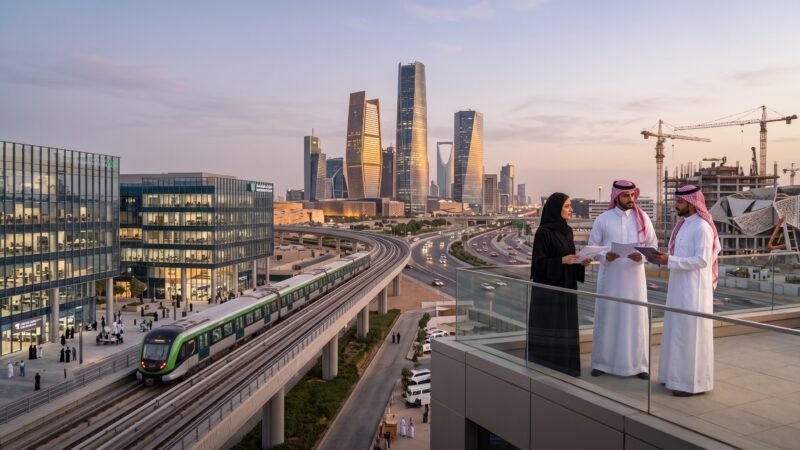
Riyadh’s skyline in 2026 is no longer just a symbol of historical oil wealth; it has become a living laboratory for the world’s most ambitious energy transition. As Saudi Arabia moves into the second half of the decade, the rhetoric of Vision 2030 has solidified into a massive, tangible marketplace for sustainable technology. For business owners, investors, and technology providers across the GCC, the Kingdom represents a unique frontier where capital meets an urgent, state-mandated demand for decarbonization.
The shift is driven by a realization that sustainability is not a philanthropic endeavor but a core economic requirement. With the Saudi Green Initiative (SGI) hitting its stride, the focus has moved from large-scale solar farms to the intricate “picks and shovels” of the green economy: software for carbon tracking, advanced materials for desert-resistant construction, and the localized manufacturing of renewable components. This is the year where “Made in Saudi” meets “Sustainable by Design.”
Green Hydrogen and the New Energy Export Paradigm
Saudi Arabia is positioning itself to be the world’s lowest-cost producer of green hydrogen. By 2026, the NEOM Green Hydrogen Project—a joint venture between ACWA Power, Air Products, and NEOM—has moved beyond the construction phase into operational reality. This has created a massive downstream ecosystem for technology providers.
Opportunities for SMEs and Tech Firms: The green hydrogen economy requires more than just electrolyzers. There is a surging demand for specialized sensors, leak detection systems, and cryogenics for hydrogen transport. Companies that can provide maintenance, repair, and overhaul (MRO) services for high-pressure hydrogen infrastructure are finding a vacuum in the market that needs immediate filling.
Strategic Consideration: While the UAE has also made significant strides with its own hydrogen strategy through ADNOC and Masdar, the sheer scale of Saudi Arabia’s landmass and solar irradiance provides a different level of scalability. Investors should look at the integration of hydrogen into the Kingdom’s industrial hubs, such as Jubail and Yanbu, where existing heavy industry is hungry for clean feedstock.
Circular Economy: Turning Waste into Industrial Value
For decades, waste management in the GCC was largely synonymous with landfills. In 2026, Saudi Arabia’s National Center for Waste Management (MWAN) has enforced strict diversion targets, aiming to recycle up to 82% of all waste. This regulatory shift has birthed a new sector: Waste-to-X technology.
The opportunities here are granular. We are seeing a rise in “reverse logistics” startups that use AI to optimize the collection of industrial recyclables. There is also a significant push for chemical recycling of plastics, which aligns with the Kingdom’s goal of creating a circular carbon economy. Technology that can convert organic waste into high-quality compost or biofuels is particularly valuable as the country seeks to green its desert landscapes.
- Plastic Upcycling: Technologies that transform polymer waste into construction materials for the Kingdom’s giga-projects.
- E-waste Recovery: As the Saudi digital economy grows, the recovery of rare earth metals from discarded electronics is becoming a strategic priority.
- Smart Sorting: AI-driven facilities that can handle the massive volumes of municipal waste generated in Riyadh and Jeddah.
Sustainable Urbanization: Beyond the Glass and Steel
The giga-projects—NEOM, The Red Sea, Qiddiya, and Diriyah—are now at stages where fit-out and operational efficiency are the priorities. In 2026, the “green building” sector has evolved. It is no longer enough to put solar panels on a roof; the entire lifecycle of the building must be accounted for.
PropTech and Passive Cooling: In the harsh climate of the Arabian Peninsula, cooling accounts for a staggering percentage of energy consumption. Business opportunities are flourishing in passive cooling technologies—materials that reflect heat or phase-change materials (PCMs) that regulate indoor temperatures without mechanical intervention. Saudi developers are actively seeking international partners who can localize the production of these high-tech materials.
Water Neutrality: Water is the Kingdom’s most precious resource. Technologies that enable 100% greywater recycling at the building level are no longer “nice-to-have” features; they are often mandatory for new developments in the Red Sea region. Startups focusing on atmospheric water generation (AWG) are also seeing increased interest for remote luxury tourism sites where traditional piping is unfeasible.
The Agritech Revolution: Desert Farming 2.0
Food security is a national security issue in Saudi Arabia. The Ministry of Environment, Water, and Agriculture (MEWA) has been aggressively funding agritech initiatives. By 2026, the focus has shifted toward high-tech greenhouses and vertical farming that can withstand 50°C summers while using 90% less water than traditional methods.
Precision Agriculture: There is a significant market for drone-based soil analysis and satellite-linked irrigation systems. These technologies allow large-scale agricultural players to monitor crop health and water usage in real-time, preventing the over-extraction of ancient aquifers.
“The goal is not just to grow food, but to grow it with a net-zero water footprint. This requires a level of technological integration that we are only just beginning to see in the Saudi market.” — Regional Sustainability Consultant
Investors should watch the Al-Jouf and Qassim regions, which are transforming into hubs for tech-enabled agriculture. Foreign firms that can offer “Turnkey Greenhouses” tailored for the GCC’s salinity and heat levels are in high demand.
Carbon Capture and the “Circular Carbon” Mandate
Unlike some Western nations that focus solely on renewables, Saudi Arabia is a champion of the Circular Carbon Economy (CCE). This framework—Reduce, Reuse, Recycle, and Remove—places a heavy emphasis on Carbon Capture, Utilization, and Storage (CCUS). For the Kingdom, CCUS is the bridge that allows it to continue utilizing its hydrocarbon resources while meeting climate targets.
The Opportunity in Utilization: Capturing CO2 is only half the battle; the real business opportunity lies in utilization. Technologies that convert captured carbon into useful products—such as synthetic fuels, chemicals, or even building aggregates—are receiving significant government backing. Saudi Aramco’s venture capital arms are particularly active in this space, looking for early-stage tech that can be scaled across their massive industrial infrastructure.
The Digital Backbone: AI and ESG Fintech
Sustainable technology is as much about data as it is about hardware. In 2026, the Saudi Exchange (Tadawul) has implemented rigorous ESG (Environmental, Social, and Governance) reporting requirements for listed companies. This has created a sudden and massive demand for ESG-focused fintech solutions.
ESG Reporting Software: Saudi firms, especially SMEs looking to enter the supply chains of Aramco or SABIC, need automated tools to track their carbon footprint, labor practices, and supply chain ethics. There is a burgeoning market for localized software that understands the specific regulatory and cultural context of the Saudi business environment.
Carbon Credits and Trading: The Regional Voluntary Carbon Market (RVCM), headquartered in Riyadh, has become a central pillar of the GCC’s climate strategy. This opens doors for blockchain developers and financial tech firms to build the platforms required for transparent, secure carbon credit trading. It is not just about the credits themselves, but the verification and auditing technology that ensures their integrity.
Regulatory Landscapes and the Cost of Entry
While the opportunities are vast, the Saudi market in 2026 is highly regulated. The Ministry of Investment (MISA) and the Saudi Industrial Development Fund (SIDF) offer various incentives, but they come with strings attached—most notably, Local Content requirements.
Under the “SDRP” (Strategic Procurement) programs, companies that manufacture a portion of their technology within the Kingdom are given preference for government contracts. For a foreign sustainable tech firm, this means that a pure “export model” is increasingly difficult. The most successful businesses in 2026 are those that have formed joint ventures with local Saudi partners to establish assembly lines or R&D centers in-country.
Regional Competition and Collaboration
It is important to distinguish Saudi Arabia’s approach from its neighbors. While the UAE’s “Net Zero by 2050” strategy is heavily focused on being a global hub for green finance and logistics, Saudi Arabia is focusing on industrial-scale sustainability. Qatar is doubling down on “Green LNG” and carbon capture in the gas sector. For a business operating across the GCC, the strategy should be: use the UAE as a regional management and finance hub, but look to Saudi Arabia for large-scale industrial deployment and manufacturing.
Challenges and Risk Factors for 2026
No market is without risk, and the sustainable tech sector in Saudi Arabia faces three primary hurdles:
- The Talent Gap: Despite the “Saudization” efforts, there is a chronic shortage of specialized engineers in fields like hydrogen electrolysis and carbon sequestration. Businesses must factor in the cost of intensive training programs.
- Supply Chain Volatility: The global demand for minerals required for green tech (lithium, copper, cobalt) remains volatile. Saudi Arabia is countering this by investing in its own mining sector, but short-term disruptions are a reality.
- The “Green Premium”: In many cases, sustainable technology is still more expensive than traditional alternatives. While government subsidies bridge the gap for now, businesses must have a clear path to cost-parity to survive in the long term.
What to Watch Next: The 2027 Horizon
As we look toward the end of 2026, several key developments will signal the next phase of growth. Keep a close eye on the Saudi National Grid’s integration of AI. As more renewable energy comes online, the volatility of solar and wind power will require a “Smart Grid” of unprecedented complexity. Companies specializing in grid-scale battery storage and AI-driven load balancing will be the next big winners.
Additionally, watch for the expansion of the Saudi Green Initiative’s reforestation program. The goal to plant 10 billion trees is moving from the planning stage to massive implementation. This will require specialized agritech for automated planting, soil moisture monitoring, and perhaps most importantly, new ways to source non-potable water for irrigation.
Finally, the evolution of Green Finance in the Kingdom is worth monitoring. We expect to see the launch of more “Green Sukuk” (Islamic bonds) specifically targeted at retail investors, allowing the Saudi public to directly fund the Kingdom’s sustainable transformation. This democratization of green investment could provide a new wave of liquidity for startups in the space.
Conclusion: A Call to Action for GCC Businesses
The window for early-mover advantage in Saudi Arabia’s sustainable tech sector is closing, but the window for scaled growth is just opening. For the GCC business community, the takeaway is clear: sustainability is no longer a peripheral department; it is the new operating system of the Saudi economy.
Success in 2026 requires a three-pronged approach: localize your manufacturing to meet content requirements, integrate AI to solve the specific climatic challenges of the region, and align your financial reporting with the increasingly stringent ESG standards of the Riyadh and international markets. The Kingdom is not just buying technology; it is building an ecosystem. Those who contribute to the foundation of that ecosystem will find themselves at the heart of the world’s most dynamic green transition.