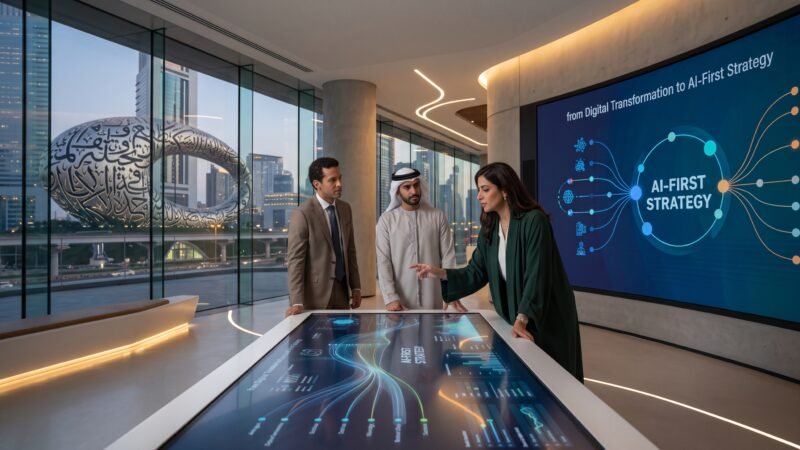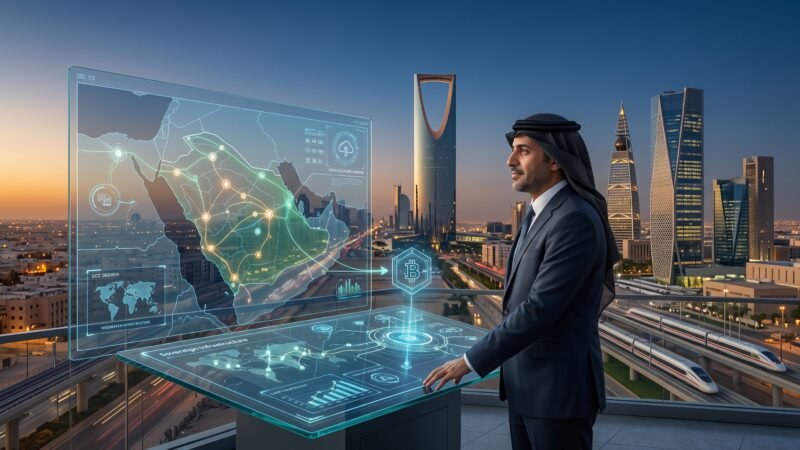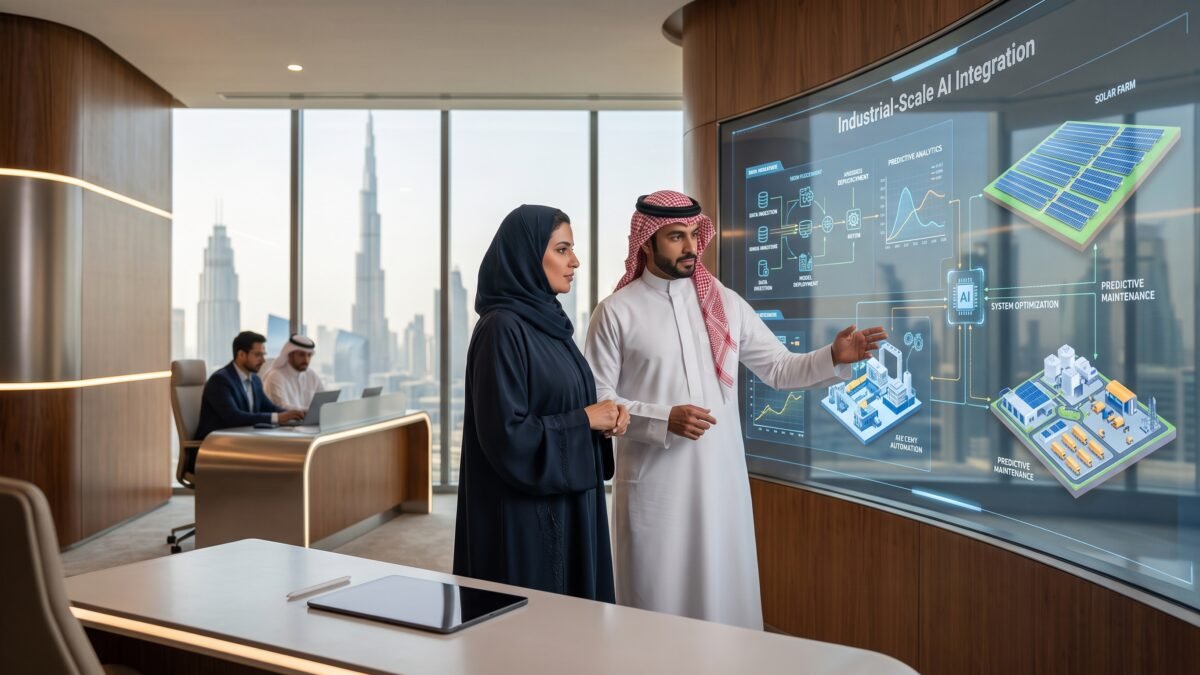
As we cross the midpoint of 2026, the Gulf Cooperation Council (GCC) has moved decisively past the era of artificial intelligence “pilot programs.” The speculative hype that characterized the early 2020s has been replaced by a pragmatic, industrial-scale integration of AI across the region’s core economic pillars. In Riyadh, Dubai, and Doha, the conversation in boardrooms has shifted from “what is possible” to “what is profitable and sovereign.”
The GCC’s unique position—characterized by massive capital reserves, a young, tech-savvy population, and a centralized push for economic diversification—has allowed it to bypass many of the legacy infrastructure hurdles facing Western economies. In 2026, technology investment is no longer a peripheral line item in national budgets; it is the primary engine driving the transition away from hydrocarbon dependency.
For business leaders and investors, the current landscape is defined by the concept of Sovereign AI. This is the realization that data and computational power are national assets as vital as oil once was. Consequently, we are seeing a massive localization of the AI value chain, from the construction of specialized data centers optimized for the Gulf’s climate to the development of Large Language Models (LLMs) trained specifically on regional dialects and cultural nuances.
Sovereign Wealth Funds as the New Tech Kingmakers
The scale of technology investment in the GCC is currently being dictated by Sovereign Wealth Funds (SWFs). Saudi Arabia’s Public Investment Fund (PIF) and the UAE’s Mubadala and ADQ have transitioned from being passive limited partners in global venture capital funds to becoming aggressive, direct lead investors in the global AI ecosystem.
In 2026, the trend is “capital for localization.” When a GCC fund invests in a global technology unicorn, the deal often includes a mandate to establish a regional headquarters, build local R&D centers, and train local talent. This “quid pro quo” investment strategy is rapidly building a self-sustaining tech ecosystem.
Saudi Arabia’s “Project Gaia” and similar initiatives have matured, creating a pipeline where AI startups are not just incubated but are immediately plugged into massive state-led projects like NEOM and the Red Sea Global development. These “giga-projects” serve as live laboratories for AI-driven urban planning, autonomous logistics, and hyper-efficient resource management, providing a scale of real-world data that few other regions can match.
The Compute Race: Data Centers and Energy Synergy
Strategic AI integration requires immense computational power, and 2026 has seen the GCC emerge as a global hub for high-performance computing (HPC). However, the narrative has evolved beyond just building “black boxes” in the desert. The focus now is on the synergy between renewable energy and data processing.
The UAE and Saudi Arabia are leading the charge in “Green AI,” utilizing their vast solar capacity to power the next generation of data centers. This is a critical development for ESG-conscious investors. By co-locating massive solar farms with AI compute hubs, the region is solving the energy-intensity problem that has plagued AI scaling in Europe and North America.
“We are no longer just exporting energy in barrels; we are beginning to export it in the form of processed data and AI services,” notes a prominent Riyadh-based technology analyst. This shift is particularly evident in Oman, where the focus on green hydrogen and coastal data centers is attracting international tech giants looking for sustainable ways to scale their global AI workloads.
Sectoral Deep Dive: Where AI is Delivering Real ROI
In 2026, the “AI dividend” is most visible in three specific sectors: Energy, Logistics, and Financial Services.
1. Energy and Utilities: The Cognitive Oilfield
The region’s national oil companies, such as Saudi Aramco and ADNOC, have successfully integrated “Cognitive Oilfield” technologies. AI models now predict equipment failure weeks in advance and optimize extraction rates in real-time based on global market fluctuations. This has significantly lowered the “lifting cost” per barrel, ensuring these giants remain competitive even as the global energy transition accelerates.
2. Logistics and Trade: The Autonomous Corridor
With the UAE and Qatar serving as global transit hubs, AI integration in logistics has moved toward fully autonomous port operations. DP World has pioneered AI-driven “predictive berthing,” which has reduced ship turnaround times by nearly 20% compared to 2024 levels. In the skies, Emirates and Qatar Airways are utilizing AI to hyper-personalize the traveler experience and optimize fuel consumption through real-time flight path adjustments.
3. Financial Services: The Rise of “Hala-Fintech”
The banking sector in Bahrain and the Dubai International Financial Centre (DIFC) has moved beyond basic chatbots. 2026 is the year of Hyper-Personalized Sharia-Compliant Finance. AI is being used to structure complex Islamic finance products in seconds, ensuring compliance while tailoring the risk profile to individual retail and corporate investors.
The Talent Gap and the “New Expat” Reality
Despite the massive capital infusions, the GCC faces a persistent challenge: the specialized talent gap. While nationalization programs (Nitaqat in KSA, Nafis in the UAE) are making strides, the demand for AI architects, data scientists, and prompt engineers continues to outpace local supply.
In response, 2026 has seen a shift in visa and residency policies. The “Golden Visa” programs have evolved to specifically target “AI nomads” and deep-tech entrepreneurs. We are seeing a new demographic of expats—highly specialized tech professionals from India, Eastern Europe, and Silicon Valley—who are choosing the Gulf not just for the tax-free salaries, but for the opportunity to work on the world’s most ambitious tech projects.
Educational institutions like the Mohamed bin Zayed University of Artificial Intelligence (MBZUAI) are now producing their third and fourth waves of graduates, but the private sector is also stepping up. Large conglomerates are establishing in-house “AI Academies” to upskill their existing workforce, recognizing that AI integration is as much a cultural shift as it is a technical one.
The Regulatory Landscape: Fragmented or Unified?
One of the most critical areas for GCC businesses to watch in 2026 is the evolving regulatory framework. While the GCC often moves as a bloc economically, AI regulation remains largely national.
The UAE has taken a “pro-innovation” stance, with the Dubai Digital Authority creating “sandboxes” where AI companies can test products with minimal red tape. Saudi Arabia, through SDAIA (Saudi Data and AI Authority), has focused on rigorous data sovereignty laws, ensuring that any data generated within the Kingdom stays within the Kingdom.
For SMEs and startups operating across borders, this fragmentation remains a hurdle. Compliance costs are rising as businesses must navigate different rules for data privacy and algorithmic accountability in Kuwait versus Oman. However, rumors of a unified GCC AI Framework are gaining traction in 2026, which would allow for the “passporting” of AI services across all six member states.
Opportunities for SMEs and the Startup Ecosystem
While the headlines are dominated by giga-projects and SWFs, the real “grassroots” tech trend in 2026 is the rise of the AI-as-a-Service (AIaaS) model for SMEs. Small and medium enterprises in the Gulf, which previously struggled with the high cost of tech adoption, can now access localized AI tools via the cloud.
Startups that focus on “Middle East-specific” problems are seeing the highest valuations. Examples include:
- AI-driven irrigation systems for desert agriculture in Oman and Saudi Arabia.
- Arabic-first natural language processing for customer service in the retail sector.
- Fintech platforms that simplify cross-border VAT and tax compliance within the GCC.
For the GCC entrepreneur, the opportunity lies in localization. Global AI models often lack the cultural nuances of the Gulf; startups that can “tune” these models for local sensibilities are finding a very warm reception from both customers and investors.
The Geopolitical Tech Tightrope
As we navigate 2026, the GCC remains a focal point of the “Tech Cold War” between the United States and China. Strategic AI integration in the region requires a delicate balancing act.
The Gulf states are increasingly refusing to “choose a side,” instead opting for a multi-vendor strategy. We see Huawei providing 6G infrastructure in the same cities where Microsoft and Oracle are building massive cloud regions. This “tech non-alignment” allows the GCC to leverage the best of both worlds, but it also introduces complexities in terms of hardware interoperability and long-term strategic dependence.
Investors should watch for how the GCC manages the “chip shortage” of 2026. With global demand for high-end GPUs still outstripping supply, the GCC’s ability to secure priority shipments through its massive sovereign wealth influence is a significant competitive advantage.
Risks and Practical Considerations for 2026
The road to full AI integration is not without its potholes. Business leaders must remain vigilant regarding several key risks:
1. The “Black Box” Problem: As AI takes over critical decision-making in sectors like healthcare and finance, the lack of transparency in algorithmic choices (the “black box”) poses legal and ethical risks.
2. Over-Investment in Hype: Despite the move toward ROI, there is still a risk of “vanity tech”—investing in high-profile AI projects that don’t actually solve a core business problem.
3. Cybersecurity: As the GCC becomes the world’s most AI-integrated region, it also becomes its most targeted. AI-driven cyberattacks are on the rise, and investment in AI-powered defense systems is now a mandatory requirement for any large enterprise.
“The greatest risk in 2026 is not that AI will replace humans, but that businesses in the GCC that fail to integrate AI will be replaced by those that do. The gap between the tech-enabled and the tech-laggard is widening into a canyon.”
What to Watch Next: The Road to 2027
As we look toward the end of 2026 and into 2027, several key indicators will signal the next phase of the GCC’s technology journey:
- The IPO of Regional Tech Giants: Watch for a wave of IPOs on the Tadawul and ADX from local AI and cybersecurity firms that have matured over the last three years.
- Robotics in Construction: With the 2030 deadlines for various Saudi projects approaching, expect a massive surge in AI-driven robotics to accelerate construction timelines.
- The “Human-AI” Labor Balance: How the region manages the social implications of AI-driven automation in the clerical and administrative sectors will be a major policy focus.
- Inter-GCC Data Sharing: Whether the member states can agree on a “Common Data Space” will determine if the region can truly compete with the scale of the US or Chinese markets.
Conclusion
In 2026, strategic AI integration has become the “new normal” for the GCC. It is no longer a futuristic concept but a fundamental component of the region’s economic DNA. For the business owner in Kuwait, the investor in Dubai, or the policymaker in Riyadh, the mandate is clear: AI must be integrated not just as a tool, but as a core strategic asset.
The transition from a resource-based economy to a knowledge-and-data-based economy is well underway. The winners in this new era will be those who recognize that while capital is abundant in the Gulf, the real competitive advantage lies in the intelligent application of that capital to solve local problems with global-standard technology.
As the region continues to build its sovereign AI capabilities, the world is watching. The GCC is no longer just a consumer of global technology; it has become a primary architect of the world’s digital future. For those positioned correctly, the remainder of the decade offers unprecedented opportunities for growth, innovation, and regional leadership.