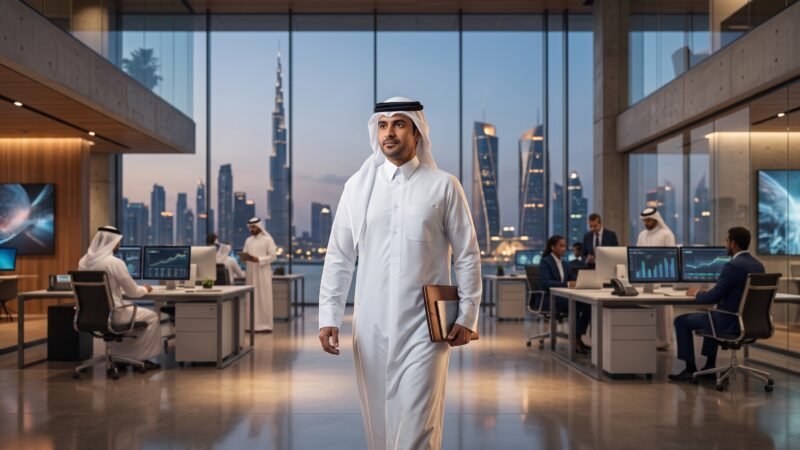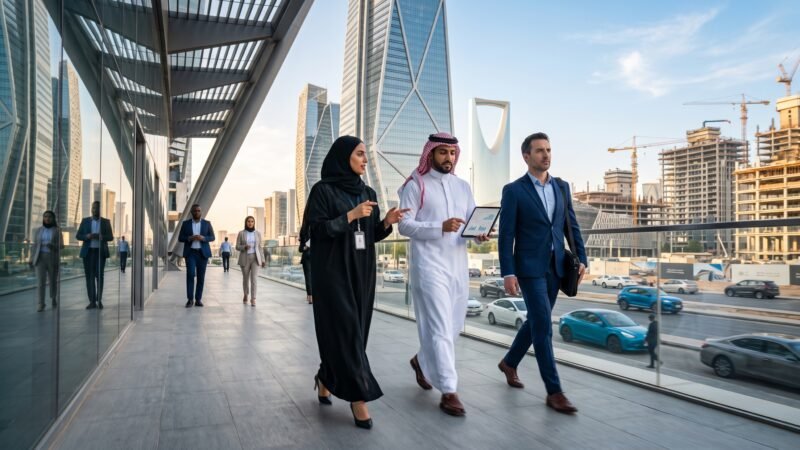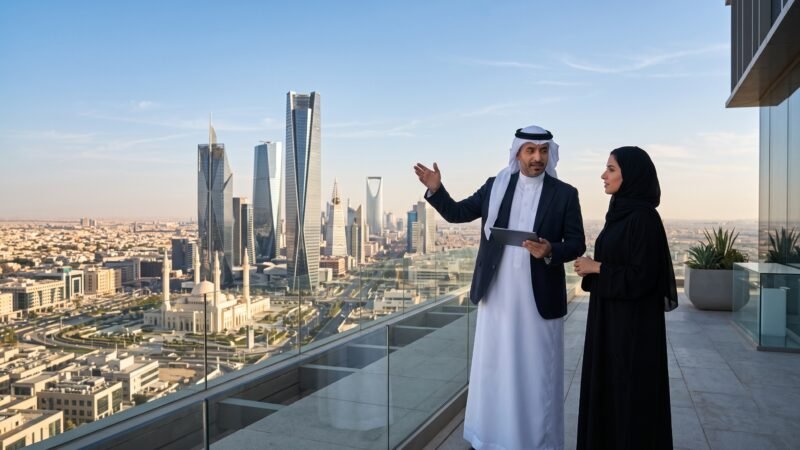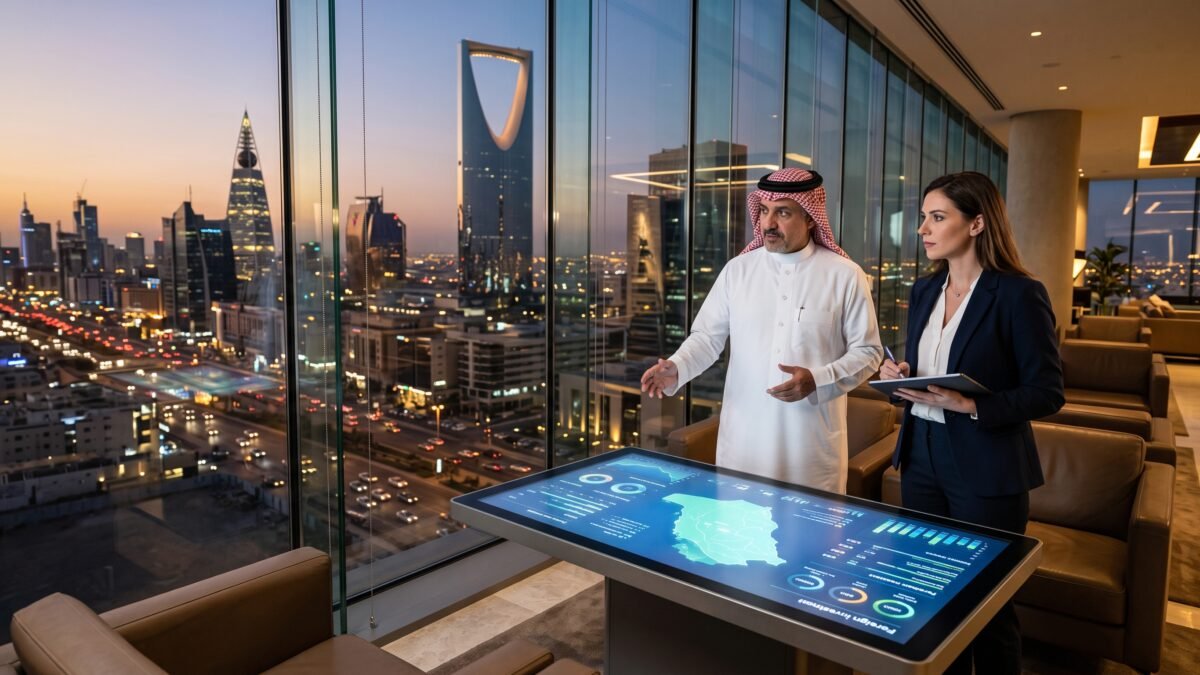
Riyadh’s skyline in 2026 serves as more than just a testament to architectural ambition; it is the physical manifestation of a decade-long economic transformation that has reached a critical inflection point. For global investors and regional business leaders, the Saudi Arabian market is no longer a frontier of “potential” but a complex, high-stakes environment where execution is the primary metric of success. As the Kingdom moves into the final four-year sprint toward Vision 2030, the regulatory framework governing foreign direct investment (FDI) has undergone its most significant overhaul since the turn of the century.
The transition into 2026 is defined by a shift from broad-brush incentives to surgical, sector-specific regulations. While the early years of the transformation were characterized by massive Public Investment Fund (PIF) outlays, the current phase relies heavily on the private sector to sustain momentum. This shift necessitates a deeper understanding of the new Investment Law, the maturing Regional Headquarters (RHQ) mandate, and the specific operational nuances of the Kingdom’s burgeoning Special Economic Zones (SEZs).
The New Investment Law: A Level Playing Field?
The cornerstone of the 2026 investment landscape is the full implementation of the updated Investment Law, which replaced the aging 2000 Foreign Investment Law. This legislation was designed to unify the treatment of Saudi and foreign investors, effectively moving toward a “national treatment” model. In practice, this has significantly reduced the bureaucratic friction that previously defined the Saudi Arabian General Investment Authority (SAGIA) era and the early years of the Ministry of Investment (MISA).
One of the most practical changes for investors in 2026 is the transition from a restrictive licensing system to a streamlined registration process. For most sectors, the requirement to obtain a specific foreign investment license has been replaced by a simplified registration, bringing Saudi Arabia closer to the regulatory ease found in jurisdictions like Singapore or the UAE’s free zones. However, “national treatment” does not mean an absence of regulation. Foreign firms must still navigate the “Negative List”—those few sectors reserved for Saudi nationals—though this list has shrunk considerably, now primarily covering sensitive areas like oil exploration and certain security services.
The 2026 regulatory environment also places a premium on transparency. The introduction of enhanced dispute resolution mechanisms, including a greater reliance on the Saudi Center for Commercial Arbitration (SCCA), has provided a degree of legal predictability that was previously a major concern for Western and Asian institutional investors. The Civil Transactions Law, which codified many aspects of contract law, has now been in effect long enough to provide a body of precedent that legal departments can actually rely upon when drafting joint venture agreements.
The Regional Headquarters (RHQ) Mandate: From Ultimatum to Reality
By 2026, the “wait and see” period for the Regional Headquarters mandate has concluded. The policy, which stipulates that the Saudi government and its related agencies will not sign contracts with foreign companies unless their regional headquarters are located in the Kingdom, has fundamentally altered the corporate geography of the GCC. While Dubai remains a dominant global hub, Riyadh has successfully captured the “decision-making” layer of firms heavily reliant on Saudi state-backed projects.
For businesses entering the market now, the RHQ status is not merely a box-ticking exercise for government tenders. It carries significant tax implications and labor law exemptions. In 2026, RHQ-certified companies benefit from a 30-year zero-percent corporate income tax rate on their RHQ activities and a range of “Saudization” waivers for their executive leadership tiers. This has created a dual-track corporate environment where RHQ firms operate under a different set of economic incentives compared to standard branch offices or local subsidiaries.
However, the challenge for 2026 is the “substance” requirement. MISA and the Zakat, Tax and Customs Authority (ZATCA) have become more rigorous in ensuring that an RHQ is not just a “brass plate” office. Firms are now expected to demonstrate that key strategic decisions, regional finance management, and senior leadership are genuinely based in Riyadh. For the broader GCC, this has led to a “hub-and-spoke” model, where a firm might keep its logistics or creative teams in Dubai or Doha while housing its C-suite and government relations teams in Riyadh.
High-Growth Sectors and Strategic Entry Points
While the giga-projects like NEOM and Qiddiya continue to attract headlines, the 2026 investment landscape offers more nuanced opportunities in sectors that support the Kingdom’s long-term industrial and digital sovereignty.
The Mining Revolution: The Third Pillar
Saudi Arabia has officially designated mining as the “third pillar” of its industrial strategy, alongside oil and petrochemicals. With an estimated $2.5 trillion in untapped mineral resources, the regulatory framework has been aggressively modernized to attract global majors. The Mining Investment Law provides a clear roadmap for exploration and exploitation licenses, with a focus on minerals essential to the global energy transition, such as copper, phosphate, and rare earth elements.
Investors in this space should look toward the “upstream” opportunities in exploration technology and the “downstream” potential in processing. The Kingdom is no longer content with exporting raw ore; the goal is to build a vertically integrated value chain. This offers significant openings for technology providers in water-efficient processing and renewable-powered mining operations, given the arid climate of the Arabian Shield.
Advanced Manufacturing and the “Alat” Initiative
2026 marks a pivotal year for Saudi manufacturing, driven largely by Alat, a PIF-owned company tasked with transforming the Kingdom into a global electronics and industrial hub. The focus is on high-tech manufacturing, including semiconductors, industrial robotics, and advanced HVAC systems. For foreign technology firms, the opportunity lies in co-investment and technology transfer. The Saudi government is offering substantial incentives for firms willing to localize their assembly lines and R&D centers, particularly within the Special Economic Zones such as Ras Al-Khair or the King Abdullah Economic City (KAEC).
The Digital Economy and Sovereign AI
Data is the new oil in the GCC, and Saudi Arabia is investing heavily in digital infrastructure. By 2026, the Cloud Computing Special Economic Zone has matured, attracting global hyperscalers. The regulatory push is toward “Sovereign AI”—ensuring that data generated within the Kingdom is processed and stored locally. This has created a secondary market for cybersecurity firms, data center operators, and AI consultancy services. The focus is moving away from simple digitalization toward the application of AI in logistics, healthcare, and urban management within the Kingdom’s emerging smart cities.
Navigating the Special Economic Zones (SEZs)
For a foreign investor in 2026, the choice of location within Saudi Arabia is as important as the decision to enter the market. The launch of several SEZs has provided specialized environments with distinct regulatory advantages. These zones are not uniform; they are tailored to specific industries:
- King Abdulaziz Economic City (KAEC) SEZ: Primarily focused on advanced manufacturing and logistics, leveraging its proximity to the King Abdullah Port.
- Jazan SEZ: A hub for heavy industry and food processing, ideally situated for trade with Africa and the broader Red Sea region.
- Ras Al-Khair SEZ: Dedicated to the maritime and mining sectors, supporting the massive King Salman International Complex for Maritime Industries and Services.
- Cloud Computing SEZ (Riyadh): A digital-first zone allowing for flexible data movement and specific tax incentives for tech firms.
The primary benefit of these zones in 2026 is the exemption from customs duties on machinery and raw materials, along with significant corporate tax holidays. However, investors must weigh these benefits against the requirement to contribute to the local ecosystem, often through knowledge transfer or the employment of Saudi talent in technical roles.
The Workforce Challenge: Saudization and Talent Acquisition
One of the most persistent challenges for foreign investors in 2026 remains the “Nitaqat” system, or Saudization. The government has become increasingly sophisticated in its approach, moving from simple quotas to “quality-based” metrics. In sectors like technology, consulting, and engineering, the pressure to hire and train Saudi nationals is intense.
However, the 2026 landscape is different from 2020. The Saudi workforce has undergone a massive upskilling program. Investors are finding a large pool of highly educated, motivated young Saudis, particularly women, who are entering the private sector in record numbers. The challenge is no longer just finding a Saudi national to fill a quota; it is competing for top-tier local talent in a market where the PIF and its subsidiaries are also hiring aggressively.
Foreign firms must factor in the cost of talent retention. Salaries in Riyadh for specialized roles are among the highest in the world, often surpassing those in London or New York when tax advantages are considered. Furthermore, the Premium Residency program (often called the Saudi “Golden Visa”) has become a vital tool for firms to attract and retain high-level expatriate talent, allowing them to live and work in the Kingdom without a local sponsor.
The Regional Context: Cooperation or Competition?
While this article focuses on Saudi Arabia, it is impossible to view these shifts in isolation from the rest of the GCC. By 2026, the economic competition between Riyadh, Dubai, and Doha has moved from a “zero-sum game” to a more nuanced regional integration. The UAE remains the region’s primary logistical and financial hub, with the DIFC and ADGM offering a level of financial sophistication that Saudi Arabia’s King Abdullah Financial District (KAFD) is still working to match.
Qatar, meanwhile, has leveraged its North Field gas expansion to become a leader in energy-intensive industries and global sports tourism. Kuwait and Oman are also carving out niches—Oman in green hydrogen and Kuwait in its “New Kuwait 2035” infrastructure projects. For the foreign investor, the GCC in 2026 should be viewed as a single, multi-nodal market. A company might manufacture in Jazan, manage its regional finances in Dubai, and run its data operations through the Cloud SEZ in Riyadh.
Risks and Practical Considerations
Despite the optimism, the Saudi market in 2026 is not without its risks. Investors must be cognizant of the following:
- Regulatory Volatility: While the trend is toward liberalization, the speed of change in Saudi Arabia can be dizzying. Regulations can be introduced or amended with very short notice periods. Having a strong local legal partner is essential.
- The Cost of Living and Operations: Inflation in Riyadh, particularly in the commercial and residential real estate sectors, has been significant. The cost of setting up an RHQ and housing expatriate staff can be a major drain on early-stage profitability.
- Geopolitical Sensitivity: While the Kingdom has made massive strides in regional diplomacy, the Middle East remains a volatile region. Investors must maintain a robust ESG (Environmental, Social, and Governance) framework that accounts for regional political shifts.
- Bureaucratic “Last-Mile” Hurdles: While high-level policy is clear, the implementation at the municipal or lower-departmental level can still be inconsistent. The “Wasta” (influence) system is fading but has been replaced by a new, tech-driven bureaucracy that requires precise compliance.
What to Watch in the Second Half of 2026
As we move toward 2027, several key indicators will determine the next phase of the investment cycle. Investors should keep a close eye on the privatization program. The government has signaled its intent to privatize assets in healthcare, education, and water desalination. The success of these initial offerings will be a litmus test for the Kingdom’s ability to transition from a state-led economy to a market-led one.
Another area to watch is the Saudi Stock Exchange (Tadawul). The exchange has become increasingly integrated with global markets, and the continued listing of PIF-owned entities provides a unique way for foreign institutional investors to gain exposure to the Kingdom’s growth without the operational burden of a direct presence.
“The Saudi market in 2026 is no longer about the ‘promise’ of Vision 2030; it is about the reality of a G20 economy that has successfully decoupled its growth from oil prices. The winners in this landscape are those who understand that ‘localization’ is not a regulatory hurdle, but a strategic necessity.”
Conclusion
The strategic opportunities in Saudi Arabia leading into 2026 are profound, but they require a sophisticated approach. The era of the “unsolicited proposal” and the easy government contract is over. In its place is a competitive, transparent, and rapidly maturing market that rewards long-term commitment and genuine value-add. For the foreign investor, the shift from a licensing-based system to a registration-based one, the clarity of the RHQ mandate, and the emergence of specialized SEZs provide a clearer roadmap than ever before.
However, the Kingdom is not a market that can be managed from afar. Success in 2026 requires “boots on the ground,” a deep commitment to the Saudi Vision, and the agility to navigate a regulatory landscape that is still in the process of perfecting itself. As Riyadh prepares to host major global events and nears its 2030 targets, the window for early-mover advantage is closing, replaced by a window for those who can execute with precision in one of the world’s most dynamic economic environments. Investors should watch for the next wave of privatization and the continued evolution of the mining sector as the primary barometers of the Kingdom’s economic health in the coming years.