By the midpoint of 2026, the narrative surrounding energy in the Gulf Cooperation Council (GCC) has undergone a fundamental transformation. What was once discussed in the future tense—green hydrogen exports, gigawatt-scale solar storage, and carbon capture clusters—is now a tangible reality on the balance sheets of regional sovereign wealth funds and private equity firms. The transition is no longer a peripheral sustainability goal; it is the primary engine of industrial diversification across Saudi Arabia, the UAE, Oman, and their neighbors.
For investors and business leaders, the 2026 landscape offers a more mature, albeit more complex, set of opportunities than the speculative environment of the early 2020s. The low-hanging fruit of utility-scale solar auctions has mostly been gathered. Today, the “smart money” is moving into the secondary and tertiary layers of the energy transition: localized manufacturing, long-duration energy storage, grid digitalization, and the high-stakes world of low-carbon molecules.
Green Hydrogen: From Pilot Projects to Industrial Export
Green hydrogen has emerged as the crown jewel of the GCC’s new energy economy. While the world watched the initial announcements in 2021 and 2022, 2026 marks the period where infrastructure is reaching operational maturity.
Oman has positioned itself as a global frontrunner through Hydrom, the state’s orchestrator for the green hydrogen sector. For investors, the opportunity in the Sultanate has shifted from securing land blocks to the midstream and downstream infrastructure. There is a growing demand for specialized logistics, ammonia storage facilities, and desalination plants dedicated to hydrogen production.
In Saudi Arabia, the NEOM Green Hydrogen Project is no longer a blueprint but a benchmark. The investment focus here is expanding into the supply chain. The Kingdom’s drive to localize the assembly of electrolyzers and wind turbine components via the Public Investment Fund (PIF) offers significant entry points for joint ventures. Foreign technology providers are finding that “plug-and-play” export models are less successful than those involving deep local partnerships and knowledge transfer.
Key Investment Areas in Hydrogen:
- Electrolyzer Manufacturing: Moving away from importing stacks to localizing the assembly and membrane production.
- Specialized Logistics: Ammonia-ready shipping and cryogenic storage solutions at ports like Duqm and NEOM.
- Certification and Verification: As the EU’s Carbon Border Adjustment Mechanism (CBAM) bites, third-party firms providing carbon-intensity certification for hydrogen exports are seeing a surge in demand.
Solar 2.0: Storage, Microgrids, and the C&I Shift
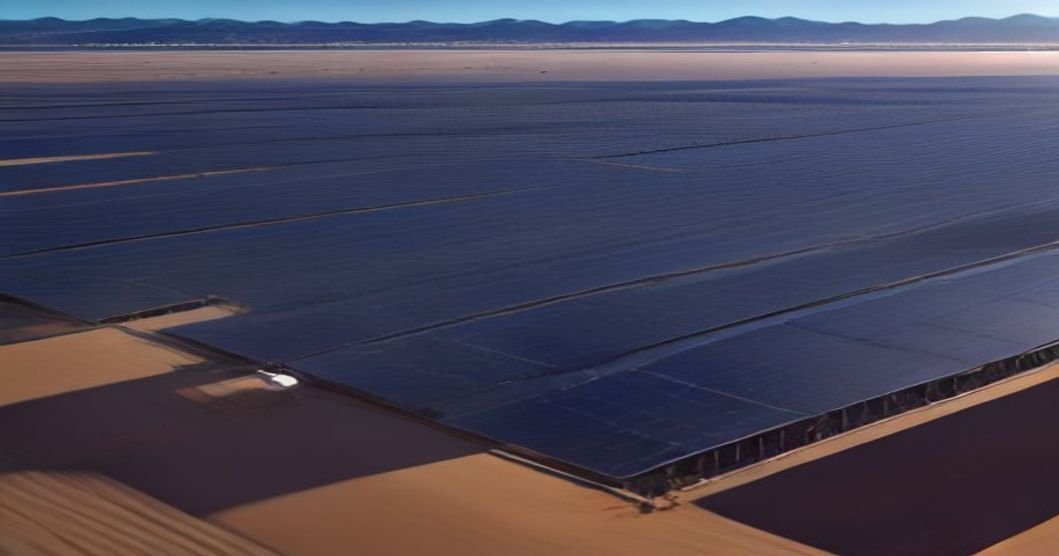
While the GCC continues to break records for the lowest solar tariffs, the nature of solar investment is changing. In 2026, the focus has shifted from pure generation to firmness and flexibility. The intermittency of solar power is the new challenge for regional grids, creating a massive opening for Battery Energy Storage Systems (BESS).
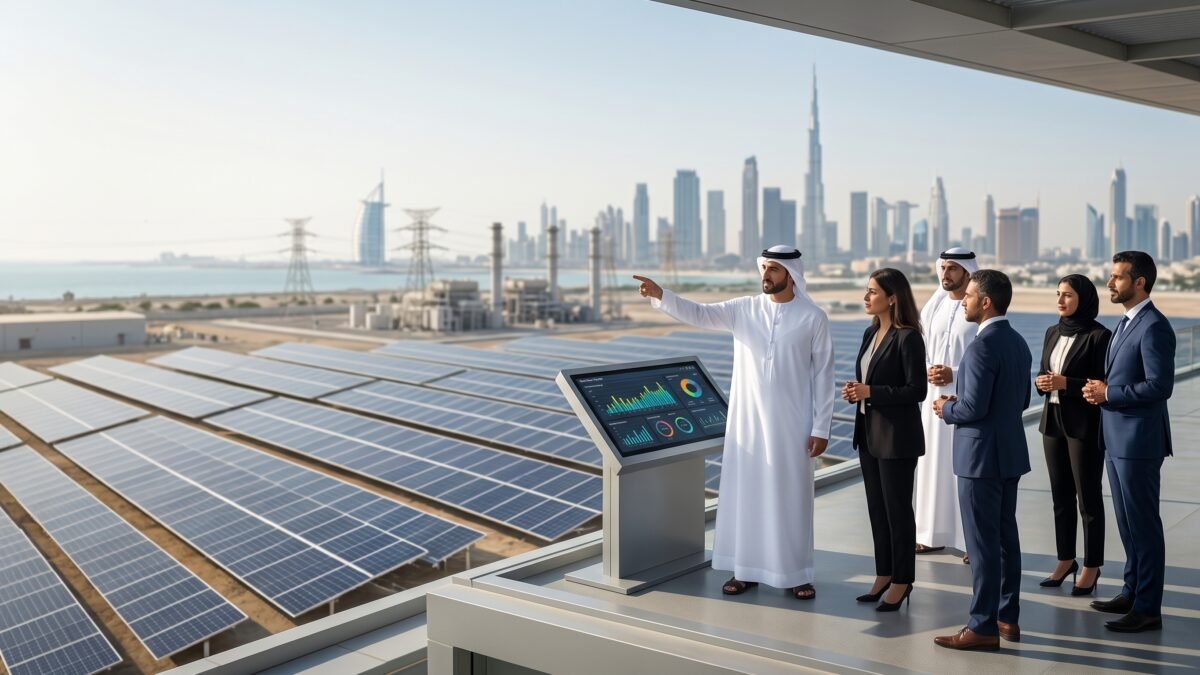
In the UAE, the Dubai Electricity and Water Authority (DEWA) and Abu Dhabi’s EWEC are increasingly integrating large-scale battery storage into their independent power producer (IPP) tenders. This creates a secondary market for battery technology providers and software developers specializing in AI-driven grid management.
Furthermore, the Commercial and Industrial (C&I) solar sector is exploding. High-energy users—aluminum smelters, data centers, and petrochemical plants—are seeking to de-carbonize their operations to remain competitive in a global market that increasingly taxes carbon footprints.
“The opportunity is shifting from the desert to the rooftop. Private power purchase agreements (PPAs) for industrial clusters are becoming a standard instrument for GCC businesses looking to hedge against future carbon costs.”
Carbon Capture, Utilization, and Storage (CCUS)
The GCC’s oil and gas majors, specifically Aramco and ADNOC, are not exiting the hydrocarbon space; they are re-engineering it. 2026 sees the GCC emerging as a global hub for CCUS technology. This is a strategic necessity to produce “blue” hydrogen and ammonia, which remain critical bridge fuels.
Investment opportunities in CCUS are found in the engineering and construction of carbon pipelines and the development of “carbon-to-value” technologies. Startups and technology firms that can convert captured CO2 into building materials, synthetic fuels, or polymers are finding a receptive audience in regional accelerators and venture capital arms like Wa’ed Ventures or Hub71.
Qatar has taken a distinct path, integrating massive CCS capabilities into its North Field expansion. For the investor, the Qatari market offers stability in the gas-to-power transition, with a focus on methane leak detection technology and high-efficiency turbines that can eventually handle hydrogen blends.
The Rise of the Circular Economy and Waste-to-Energy
Energy transition is often conflated only with electricity, but in the GCC, the nexus of energy, water, and waste is inseparable. The UAE has led the charge with the Sharjah waste-to-energy plant and similar projects in Abu Dhabi and Dubai.
By 2026, Kuwait and Bahrain are also looking toward waste-to-energy as a solution to land scarcity and rising power demand. This sector offers opportunities for specialized EPC (Engineering, Procurement, and Construction) firms and waste management technology companies. The integration of “circularity” into industrial zones—where the waste of one factory becomes the energy source for another—is a growing trend in Saudi Arabia’s MODON industrial cities.
Financing the Transition: Green Sukuk and Sustainable Finance
The scale of the energy transition in the Gulf requires trillions of dollars in capital. In 2026, we are seeing a sophisticated evolution in how these projects are funded. Green Sukuk (Islamic bonds) have become a mainstream instrument, bridging the gap between traditional Sharia-compliant finance and global ESG (Environmental, Social, and Governance) requirements.
The financial centers of DIFC in Dubai and ADGM in Abu Dhabi have established themselves as the “green finance” hubs of the Middle East. For institutional investors, the GCC now offers a transparent regulatory framework for sustainable investment.
What to watch in GCC finance:
- Transition Finance: A move toward funding the “greening” of traditionally brown industries, such as cement and steel.
- Retail Green Investment: New platforms allowing individual investors to participate in regional solar and wind farms via fractional ownership.
- Carbon Credits: The development of regional carbon exchanges, such as the Regional Voluntary Carbon Market Company (RVCMC) in Riyadh, is providing a new liquidity layer for decarbonization projects.
Manufacturing Localization: The “In-Country Value” Opportunity
One of the most significant shifts for foreign investors in 2026 is the emphasis on localization. Governments across the region are no longer content with being technology importers. Programs like Saudi Arabia’s “Shareek” and the UAE’s “Make it in the Emirates” are rewarding companies that move their manufacturing and R&D to the Gulf.
For a technology company, the strategic opportunity lies in setting up shop in the GCC to serve not just the local market, but the wider MENA and African regions. The region’s strategic location, combined with low energy costs for manufacturing and high-quality infrastructure, makes it an ideal base for producing the hardware of the energy transition.
Risks and Practical Considerations
While the opportunities are vast, the GCC energy transition is not without its hurdles. Investors must navigate a landscape that is both highly regulated and rapidly changing.
1. Regulatory Fragmentation: While the GCC shares a common vision, the regulatory frameworks of Saudi Arabia, the UAE, and Oman differ significantly. A “one-size-fits-all” approach to the region often fails. Investors must understand the specific local content requirements and labor laws in each jurisdiction.
2. Talent Scarcity: The rapid expansion of the green economy has outpaced the local supply of specialized engineers and sustainability experts. Companies that invest in training and human capital development will have a competitive advantage.
3. Geopolitical Sensitivities: Energy is inherently political. While the region is currently in a phase of de-escalation and economic focus, global shifts in trade relations can impact supply chains for critical minerals and technology.
4. Technology Maturity: In the rush to adopt green hydrogen and CCUS, there is a risk of betting on technologies that may be disrupted by next-generation breakthroughs. Diversification of the technology portfolio is essential.
The Role of SMEs and Startups
In 2026, the energy transition is no longer just the playground of state-owned enterprises and multinational giants. A vibrant ecosystem of Small and Medium Enterprises (SMEs) is emerging to support the transition.
Opportunities for smaller players exist in:
- Digital Twins: Software that creates virtual models of energy infrastructure to optimize performance.
- EV Charging Infrastructure: As electric vehicle adoption picks up in cities like Riyadh and Dubai, the demand for smart charging solutions and maintenance is soaring.
- Energy Auditing: Helping SMEs and large corporations reduce their energy intensity to meet new government mandates.
The 2026 Outlook: What to Watch Next
As we look toward the remainder of 2026 and into 2027, several key indicators will signal the next phase of the energy transition.
First, watch for the first commercial green hydrogen shipments leaving the ports of Oman and Saudi Arabia for Europe and North Asia. The success of these initial cargoes will determine the bankability of the next wave of hydrogen projects.
Second, the integration of AI in energy management will move from experimental to essential. With the GCC investing heavily in data centers, the ability to power these facilities with 24/7 renewable energy using AI-optimized grids will be a major competitive differentiator.
Third, keep an eye on regional grid interconnection. The GCC Interconnection Authority (GCCIA) is working to enhance the sharing of power across borders. A truly integrated regional grid would allow for more efficient use of renewable resources—for example, utilizing Saudi wind power to meet peak summer demand in Kuwait.
Conclusion: A Strategic Imperative
The energy transition in the GCC is a multi-decade project, but 2026 represents a critical inflection point where strategic investment is yielding high-value returns. The transition is moving beyond the simple installation of solar panels into a sophisticated industrial revolution that touches every sector of the economy.
For investors, the mandate is clear: move beyond the role of a passive financier. The greatest opportunities lie in localized manufacturing, the digital layer of energy management, and the midstream infrastructure of the new molecule economy. Those who align their capital with the national visions of the GCC states—while bringing genuine technology transfer and operational expertise—will find themselves at the center of the world’s most ambitious energy laboratory.
The “business as usual” model of the oil era is gone; in its place is a dynamic, technology-driven market that rewards agility, local commitment, and a deep understanding of the unique energy-water-waste nexus of the Arabian Peninsula. Companies and investors should watch for the upcoming H2 2026 policy updates in Saudi Arabia and the UAE, which are expected to further incentivize private sector participation in the green energy supply chain.