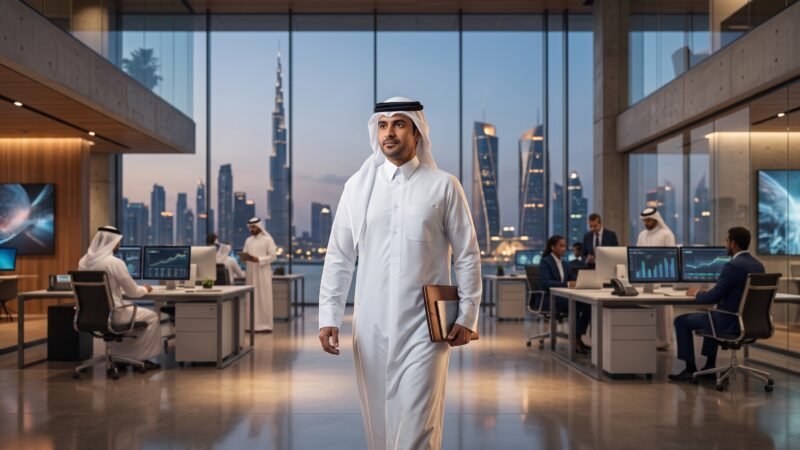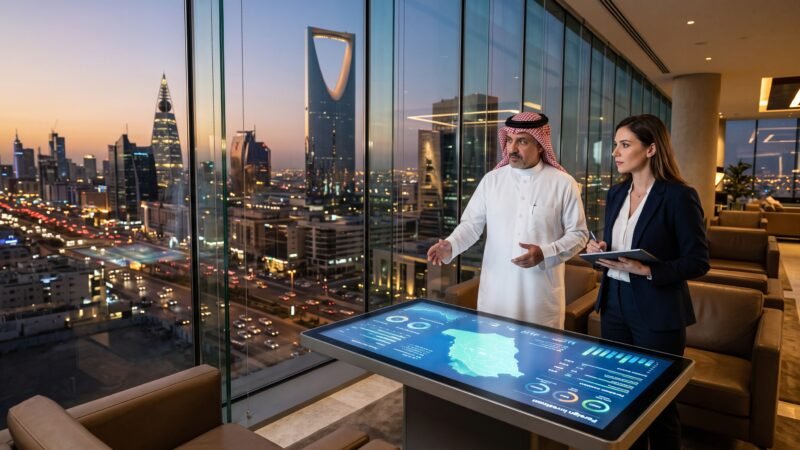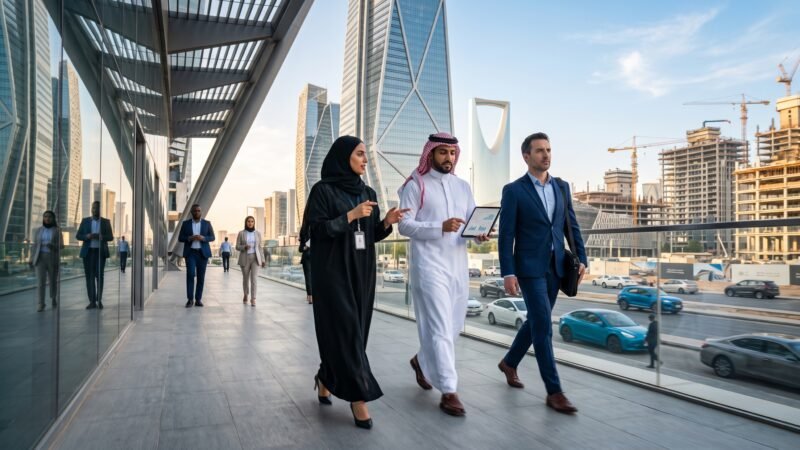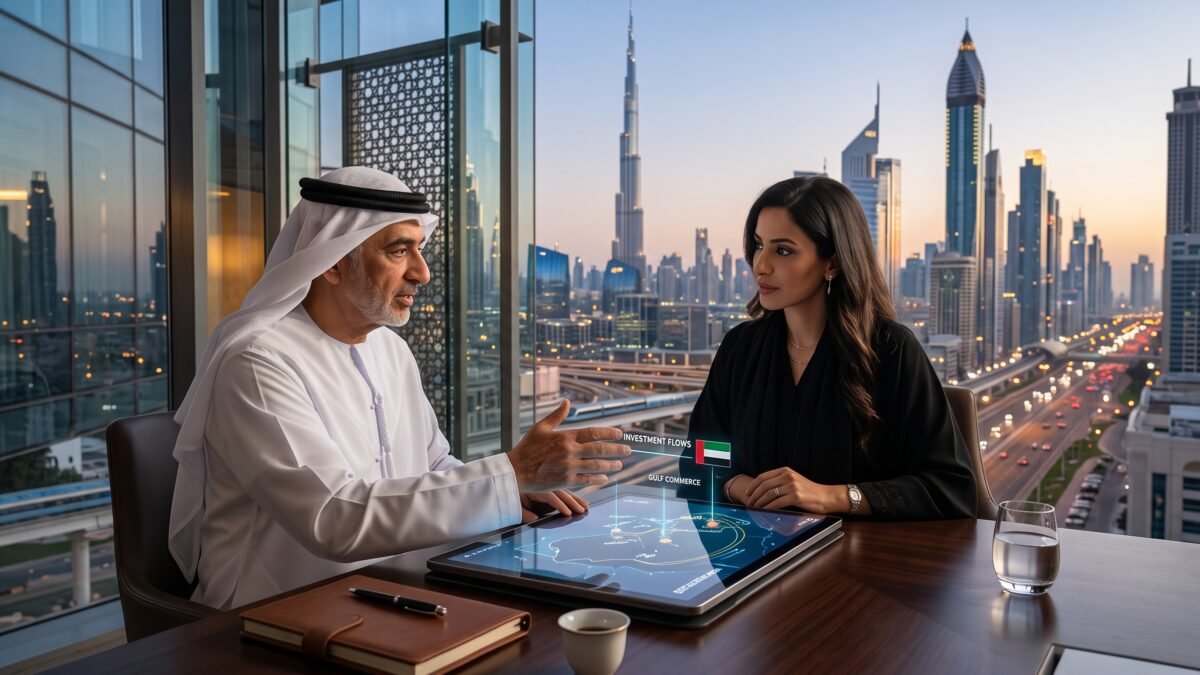
By the middle of 2026, the conversation surrounding Artificial Intelligence in the Gulf Cooperation Council (GCC) has moved past the speculative hype of large language model (LLM) launches and entered a phase of deep industrial integration. The catalyst for this transformation has predominantly been the strategic, multi-billion dollar investment vehicle of the United Arab Emirates. While Riyadh remains the largest market in terms of sheer scale and domestic demand, the UAE has positioned itself as the GCC’s primary AI venture capitalist and infrastructure architect, creating a ripple effect that is reshaping how businesses operate from the Port of Salalah to the financial hubs of Kuwait City.
In 2026, we are witnessing the fruition of decisions made two to three years prior—specifically the formation of massive investment entities like MGX and the aggressive expansion of G42. These are no longer just national champions for the UAE; they have become regional utilities. For the GCC business owner, the “UAE AI effect” is felt through lower barriers to entry for advanced computing power, localized sovereign AI models that respect regional cultural nuances, and a logistics network that is arguably the most automated in the world.
The Rise of Sovereign AI as a Regional Utility
One of the most significant developments through 2026 has been the transition of AI from a “cloud service provided by Silicon Valley” to a “sovereign utility provided by Abu Dhabi.” The UAE’s massive investments in the Falcon and Jais models have provided a blueprint for the rest of the GCC. Rather than relying solely on generic models that often struggle with the nuances of Khaleeji Arabic dialects or regional regulatory frameworks, GCC businesses are increasingly adopting these locally-tuned systems.
For a family-owned conglomerate in Jeddah or a retail chain in Manama, this matters because it ensures data residency and cultural alignment. UAE-backed AI infrastructure has effectively democratized access to high-performance computing. Through partnerships across the border, Saudi Arabian startups are now leveraging the compute power housed in UAE data centers to build applications for the Kingdom’s “Vision 2030” projects. This cross-border synergy is creating a unified tech ecosystem that mimics the integrated nature of the European Union’s digital single market, albeit with a uniquely Gulf flavor.
MGX and the New Era of Infrastructure Investment
The 2024 launch of MGX, the Abu Dhabi-based investment firm focused on AI and semiconductors, has reached its stride in 2026. By investing in global giants like OpenAI and partnering with chipmakers, the UAE has secured a “seat at the table” for the entire GCC. This isn’t just about financial returns; it is about securing the supply chain. In an era where GPUs (Graphics Processing Units) are as vital as oil was in the 20th century, the UAE’s strategic investments ensure that the Gulf is not left at the back of the queue for hardware.
This “hardware diplomacy” benefits the broader region. We are seeing co-investments between UAE entities and Saudi Arabia’s Public Investment Fund (PIF) to establish massive data center clusters that serve the entire peninsula. For the GCC professional, this means faster latency, better localized services, and a tech stack that is resilient to global geopolitical shifts.
Transforming the Backbone: Logistics and the “Middle Corridor”
The GCC’s economic strength has long been its position as a global logistics hub. In 2026, AI investments from the UAE are being used to defend and expand this position. DP World and AD Ports Group have integrated AI-driven predictive analytics across their regional footprints, including operations in Oman and Saudi Arabia. This has transformed the “Middle Corridor” trade route.
AI is now managing port congestion in real-time, predicting maintenance needs for container fleets, and optimizing the multimodal transport of goods across the GCC rail network. For SMEs in the region, this translates to predictable supply chains. The “just-in-time” delivery model, which was severely tested during the early 2020s, has been replaced by “AI-optimized” delivery, reducing overheads for small businesses that previously struggled with the high cost of regional logistics.
The Impact on Saudi Arabia’s Giga-Projects
While the UAE provides much of the investment and foundational tech, Saudi Arabia remains the most significant theater for its application. In 2026, the integration between UAE-developed AI tools and Saudi giga-projects like NEOM and the Red Sea Project is profound. AI is being used to manage the cognitive cities of the future, where everything from energy consumption to waste management is handled by autonomous systems.
The relationship is symbiotic. The UAE provides the “brain” (the algorithms and the compute power), while Saudi Arabia provides the “body” (the massive scale and construction demand). This partnership is driving a construction tech boom, where AI-driven 3D printing and autonomous site management are becoming the standard, significantly reducing the reliance on low-skilled labor—a key pillar of the labor reforms across the GCC.
The Financial Sector: From Fintech to AI-First Banking
In the financial hubs of the Dubai International Financial Centre (DIFC), Abu Dhabi Global Market (ADGM), and the King Abdullah Financial District (KAFD) in Riyadh, AI investments have moved into the core of the banking sector. The traditional banking model in the GCC—often criticized for being slow and bureaucratic—is being disrupted by AI-first entities funded by UAE venture capital.
Hyper-personalization is the trend of 2026. Banks are now using AI to offer credit facilities to SMEs in minutes rather than weeks, using non-traditional data points for credit scoring. This is a game-changer for the GCC’s entrepreneurial ecosystem. In Kuwait and Qatar, where the banking sectors are highly liquid but traditionally conservative, we are seeing a rapid adoption of UAE-developed AI compliance and anti-money laundering (AML) tools. These tools allow regional banks to interface more seamlessly with global markets while maintaining strict local regulatory standards.
Wealth Management and the Retail Investor
The rise of AI-driven robo-advisors, backed by regional sovereign wealth funds, has opened up global markets to the average GCC resident. These platforms are now sophisticated enough to offer Sharia-compliant AI portfolios that automatically rebalance based on global market shifts. For the GCC consumer, this represents a shift from saving in real estate or gold to participating in a more diversified, technology-driven global economy.
The Talent War and the “Brain Gain”
One of the most visible impacts of UAE AI investments in 2026 is the reversal of the “brain drain.” For decades, the GCC’s brightest minds in STEM often headed to Silicon Valley or London. Today, the trend is moving in the opposite direction. The UAE’s “Golden Visa” program, coupled with massive R&D spending at institutions like the Mohamed bin Zayed University of Artificial Intelligence (MBZUAI), has created a magnet for global talent.
This talent pool is not staying within the borders of the UAE. We are seeing a “circulation of expertise” where AI researchers trained in Abu Dhabi are moving to Riyadh to lead departments in Aramco or to Doha to work on Qatar’s digital transformation initiatives. The UAE’s investment in education and research has effectively created a regional talent pipeline. This is critical for GCC businesses that previously had to pay exorbitant fees to Western consultants to implement basic digital strategies.
Navigating the Challenges: Ethics, Energy, and Geopolitics
Despite the optimism, the strategic AI investments of 2026 bring a new set of challenges that GCC business leaders must navigate. The most pressing of these are energy consumption and the geopolitical “tightrope.”
The Energy-AI Paradox
AI is energy-intensive. The massive data centers required to power the GCC’s digital ambitions require enormous amounts of electricity and cooling. The UAE and Saudi Arabia are addressing this by co-locating data centers with massive solar farms and nuclear power plants (like the Barakah plant). However, for the smaller GCC states like Bahrain or Kuwait, the energy cost of going “AI-heavy” is a significant budgetary consideration. Business leaders must look for “green AI” solutions and invest in energy-efficient hardware to avoid being penalized by the region’s evolving carbon tax frameworks and ESG (Environmental, Social, and Governance) requirements.
The Geopolitical Balancing Act
The UAE’s AI strategy involves a delicate balance between US technology (Microsoft, Nvidia) and the regional need for autonomy. For a business in the GCC, this means being aware of “tech sovereignty.” There is a risk that being too reliant on a single investment ecosystem could expose a company to secondary sanctions or export controls. In 2026, the most successful GCC firms are those that maintain a “multi-cloud” and “multi-model” strategy, ensuring they can pivot if geopolitical tensions shift the availability of certain technologies.
The Ethics of Automation
As AI takes over more administrative and middle-management roles, the GCC faces a social challenge. Nationalization programs (Emiratization, Saudization, etc.) are being redesigned. The goal is no longer just to put citizens in jobs, but to put them in AI-augmented roles. Businesses that fail to upskill their local workforce to work alongside AI will find themselves at odds with government mandates. The focus in 2026 has shifted from “protecting jobs” to “protecting the employability of citizens.”
Sector Opportunities: Where to Watch in Late 2026
As we move through the latter half of 2026, several specific niches are emerging as high-growth areas for investors and entrepreneurs:
- AI-Driven Healthcare: Leveraging the UAE’s investment in genomic sequencing, we are seeing a boom in personalized medicine across the GCC. Startups that can integrate AI with the region’s growing healthcare infrastructure are seeing record valuations.
- EdTech and Reskilling: There is a massive market for platforms that use AI to retrain the existing GCC workforce for the “AI era.” This is particularly relevant in Kuwait and Oman, where the youth population is looking for high-value tech roles.
- AgriTech: With food security being a national priority for all GCC states, AI-driven vertical farming and desert agriculture, funded by UAE venture capital, are becoming commercially viable.
- Cybersecurity: As the region becomes more digital, the “attack surface” grows. AI-powered defensive security is perhaps the most critical sub-sector for GCC government and enterprise clients.
The SME Perspective: Not Just for the Giants
A common misconception is that the UAE’s AI investments only benefit entities like ADNOC or Emirates NBD. In reality, the most profound changes in 2026 are occurring at the SME level. The availability of “AI-as-a-Service” means that a small marketing agency in Muscat or a boutique law firm in Kuwait City can now use tools that were previously the domain of multinational corporations.
The UAE’s investments have lowered the cost of localized AI. This allows SMEs to automate customer service in multiple dialects, optimize their local SEO with high-precision Arabic content, and manage their cash flow with predictive accounting software. For the first time, the “technological gap” between a GCC startup and a Silicon Valley startup has almost entirely closed.
What Should GCC Business Leaders Watch Next?
As we look toward 2027, the focus is shifting from generative AI to agentic AI—systems that don’t just write text but actually perform complex tasks autonomously. GCC businesses should prepare for a world where AI “agents” handle procurement, negotiate basic contracts, and manage logistics without human intervention.
Furthermore, the integration of AI with the “Internet of Things” (IoT) in the region’s industrial zones will be the next frontier. From the aluminum smelters of Bahrain to the petrochemical plants of Qatar, the “Autonomous Factory” is becoming a reality. Business owners should be auditing their current digital infrastructure to ensure it is “AI-ready”—which means having clean, structured, and accessible data.
“The competitive advantage in the GCC is no longer about who has the most capital, but who can deploy that capital into the most efficient AI-driven workflows.” — Regional Market Analyst, 2026.
The Road Ahead: A Unified Digital Future
The strategic UAE AI investments that have dominated the headlines over the past few years have successfully transformed the GCC into a global technology powerhouse. By 2026, the region has moved beyond being a mere consumer of technology to becoming a primary producer and orchestrator of it. This shift has created a more resilient, diversified, and efficient business landscape.
For the business owner in the Gulf, the message is clear: the “AI Revolution” is no longer a future prospect—it is the current operating environment. Success in this new era requires a willingness to move away from legacy business models and embrace a data-driven approach. The infrastructure is in place, the capital is flowing, and the talent is arriving. The question for 2026 is no longer whether to adopt AI, but how quickly you can integrate it into the DNA of your organization to stay competitive in an increasingly automated GCC.
As the UAE continues to lead the charge, the benefits are being felt across the entire region. The GCC is no longer just an “oil and gas” story; it is a “chips and code” story. For those who can navigate the complexities of this transition, the opportunities for growth and innovation are unprecedented in the history of the Gulf.