The venture capital landscape across the Gulf Cooperation Council (GCC) has entered a period of sophisticated maturity. If 2021 was the year of exuberant valuations and 2023 was the year of the “great reset,” 2026 stands as the era of the “Great Rationalization.” In Riyadh, Dubai, Abu Dhabi, and Doha, the conversation among General Partners (GPs) and Limited Partners (LPs) has shifted decisively away from top-line growth at any cost toward sustainable unit economics, path-to-profitability, and strategic alignment with national transformation agendas.
For founders and investors operating within the Saudi, Emirati, Qatari, Kuwaiti, Bahraini, and Omani markets, the rules of engagement have fundamentally changed. Capital is no longer a commodity; it is a strategic tool deployed with surgical precision. As we navigate the midpoint of the decade, several emerging shifts are redefining how startups are funded, scaled, and eventually exited within the region.
The Dominance of Sovereign-Backed Fund-of-Funds
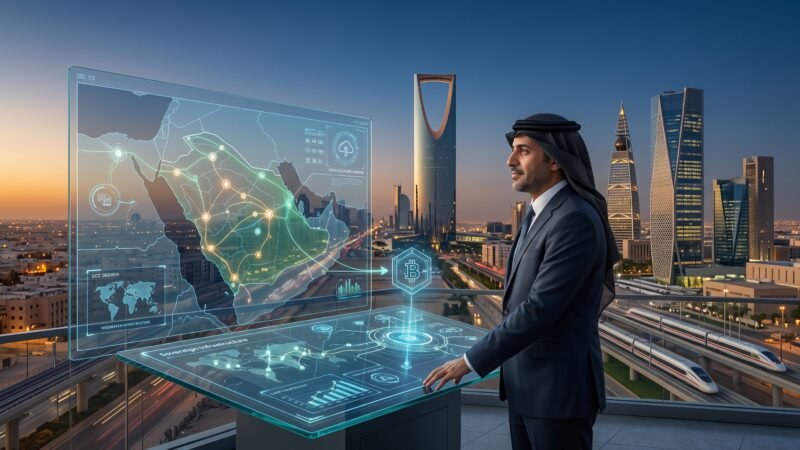
One of the most significant structural shifts in 2026 is the institutionalization of the venture asset class through sovereign-backed vehicles. In Saudi Arabia, Jada (the Saudi Investment Company) and the Saudi Venture Capital Company (SVC) have successfully moved the needle from merely providing liquidity to shaping the professionalism of local VC firms. We are seeing a similar trajectory in the UAE with the Emirates Investment Authority and various vehicles under the Mubadala and ADQ umbrellas.
These entities are no longer just passive LPs. They are increasingly demanding that the funds they back demonstrate a clear “value-add” to the local economy. This means VCs are now expected to facilitate knowledge transfer, support the localization of supply chains, and actively help their portfolio companies navigate the regulatory complexities of the GCC. For a startup in 2026, receiving investment from a fund backed by these giants carries a stamp of institutional credibility that is essential for winning government contracts and large-scale enterprise deals.
The Rise of the “Regional Headquarters” (RHQ) Mandate
The Saudi Arabian RHQ policy, which required multinational firms to establish their regional bases in Riyadh to bid for government contracts, has trickled down into the venture ecosystem. In 2026, we see VCs increasingly pressuring their portfolio companies to formalize their presence in the Kingdom early in their lifecycle. This has created a unique dynamic where startups often “dual-headquarter” between Dubai—for its international lifestyle and established legal frameworks—and Riyadh—for its massive market depth and procurement opportunities.
Sector Rotation: Beyond Fintech and E-commerce
While Fintech and E-commerce historically dominated GCC venture flows, 2026 shows a marked diversification into “harder” technologies. The low-hanging fruit of payment gateways and last-mile delivery has been largely picked. Today, the smartest capital is flowing into sectors that solve structural regional challenges.
ClimateTech and Energy Transition
Following the long-term momentum generated by COP28 in Dubai and subsequent regional sustainability initiatives, ClimateTech has emerged as a top-tier asset class. Investors are looking for solutions in solar efficiency, water desalination technology, and carbon capture. In Oman and Saudi Arabia, specifically, venture dollars are backing startups that can integrate into the burgeoning green hydrogen economy. This is not just “greenwashing”; it is a pragmatic response to the regional push for net-zero targets and economic diversification away from hydrocarbons.
Deep Tech and Generative AI Localization
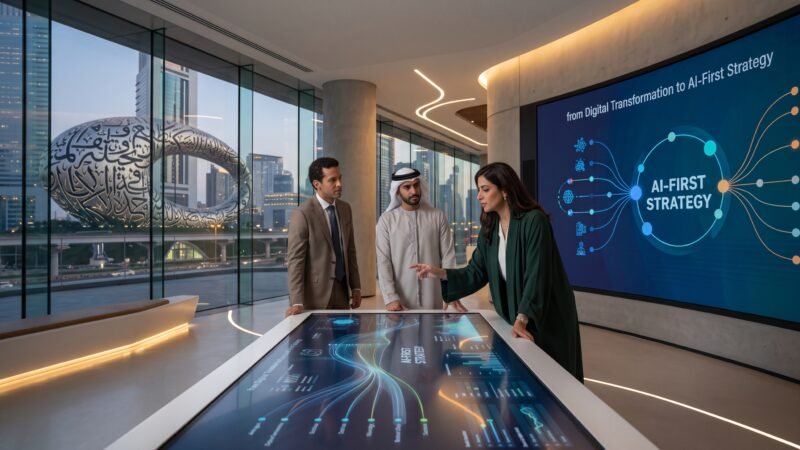
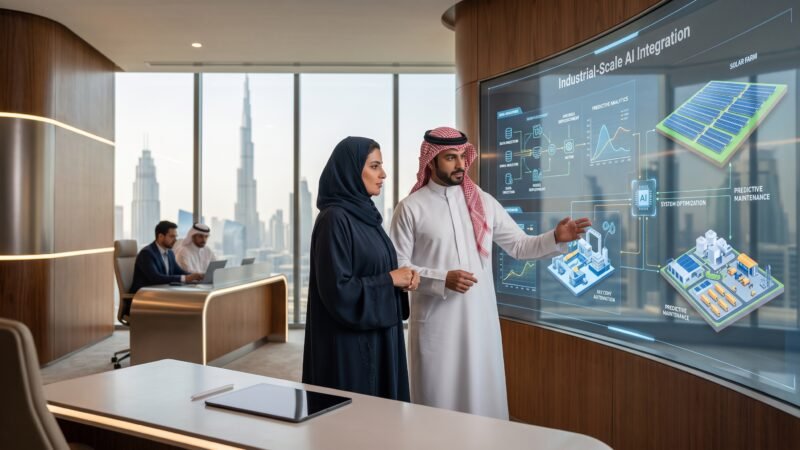
The UAE has solidified its position as a global hub for Artificial Intelligence, but the shift in 2026 is toward application over foundation. While large language models (LLMs) like Falcon set the stage, venture capital is now funding the “application layer”—startups that use AI to optimize logistics in Jebel Ali, automate legal compliance in the DIFC, or personalize healthcare in Saudi’s Ministry of Health initiatives. Investors are particularly keen on “sovereign AI”—startups that ensure data remains within the GCC, complying with increasingly stringent local data residency laws.
HealthTech and Biotech
With the GCC’s focus on improving life expectancy and managing lifestyle-related diseases, HealthTech has seen a surge in late-stage funding. We are seeing significant interest in genomics, particularly in Qatar and the UAE, where national genome projects have provided a wealth of data for startups to develop personalized medicine. VC firms are no longer just looking at tele-health apps; they are looking at biotech firms that can manufacture locally and reduce the region’s reliance on imported pharmaceuticals.
The “Exit” Reality: From Theory to Practice
For years, the biggest critique of the GCC startup ecosystem was the lack of exits. In 2026, this narrative is finally being challenged, though perhaps not through the global M&A routes many expected. Instead, the regional public markets have become the primary exit vehicle.
The Nomu-Parallel Market in Saudi Arabia has matured into a vibrant destination for tech listings. We are seeing companies listing earlier than they would on the NYSE or LSE, providing much-needed liquidity for early-stage investors. Similarly, the Dubai Financial Market (DFM) and Abu Dhabi Securities Exchange (ADX) have introduced tech-friendly listing rules that are encouraging local “soho-tech” and mid-market firms to go public.
However, the M&A landscape remains nuanced. While international giants like Uber or Amazon occasionally acquire local champions, the more common trend in 2026 is “intra-regional consolidation.” Well-funded Saudi startups are acquiring UAE-based competitors to gain a foothold in the Emirates, and vice versa. This “GCC-to-GCC” M&A activity is creating larger, more resilient regional champions capable of eventually competing on the global stage.
The Evolution of the Investor Base: Beyond the VC Firm
The composition of who provides venture capital in the Gulf has evolved. We are seeing three distinct groups gain prominence alongside traditional VC firms.
- Family Offices 2.0: The younger generation of GCC family business leaders is moving away from traditional real estate and equity portfolios. They are setting up professionalized venture arms that act with the speed of a VC but the patience of a family office. They are particularly active in Series A and B rounds, often acting as the “bridge” for international startups entering the region.
- Corporate Venture Capital (CVC): Companies like Aramco (via Wa’ed Ventures), STC, and e& (formerly Etisalat) have become some of the most active investors in the region. In 2026, their focus is on strategic synergy. They aren’t just looking for financial returns; they are looking for technologies that can be integrated into their massive infrastructure.
- Secondary Funds: As the ecosystem matures, we are seeing the emergence of dedicated secondary funds. These players buy out early investors or employees in successful startups, providing liquidity before an IPO. This is a crucial sign of a healthy, maturing market.
The Challenges of 2026: Talent, Regulation, and Valuation
Despite the optimism, the GCC venture ecosystem faces significant headwinds. The most pressing is the “war for talent.” While the UAE’s Golden Visa and Saudi Arabia’s specialized talent visas have helped, the demand for high-level engineers, data scientists, and experienced product managers still far outstrips supply. This talent gap is driving up burn rates as startups compete for a limited pool of experts, often headhunted from global tech hubs.
Furthermore, regulatory divergence remains a hurdle. While the GCC Customs Union and other initiatives aim for integration, a startup expanding from Kuwait to Oman or from Bahrain to Saudi Arabia still faces different licensing requirements, labor laws, and tax treatments (such as varying VAT implementations and the Corporate Tax in the UAE). VCs are now pricing in this “expansion friction” when valuing companies that claim to be “Pan-GCC.”
Valuation discipline is another hallmark of 2026. The days of 50x revenue multiples are over. Investors are now utilizing more traditional valuation metrics, often discounted for the geopolitical risks inherent in the Middle East. This has led to a “flight to quality,” where the top 10% of startups receive the majority of the funding, while the “mediocre middle” struggles to close rounds.
The Role of Bahrain and Kuwait in a Riyadh-Centric World
As Saudi Arabia and the UAE command the lion’s share of capital, other GCC nations are carving out specialized niches. Bahrain has successfully positioned itself as a “test-bed” for regulated industries. Its nimble regulatory environment makes it an ideal place for Fintechs to pilot products before scaling into the larger Saudi market. The Central Bank of Bahrain’s (CBB) proactive approach to crypto-assets and open banking remains a benchmark for the region.
Kuwait, meanwhile, continues to produce some of the region’s most creative and resilient entrepreneurs, particularly in the consumer tech and food-tech spaces. However, the Kuwaiti venture scene in 2026 is characterized by a “capital export” model, where Kuwaiti investors are highly active across the GCC, even if the local startup scene is smaller in scale compared to its neighbors.
Practical Considerations for GCC Founders in 2026
For entrepreneurs looking to raise capital in this environment, the approach must be highly localized and data-driven. Investors are no longer impressed by “the Uber of the Middle East” pitches. They want to see:
- Localized Intellectual Property: How does your technology specifically address the nuances of the Arabic language, regional consumer behavior, or local climate conditions?
- Government Alignment: How does your growth contribute to Vision 2030, “We the UAE 2031,” or the Qatar National Vision 2030? Understanding the “Key Performance Indicators” of the government can often unlock non-dilutive funding or strategic partnerships.
- Unit Economic Clarity: Can you show a clear path to break-even? In 2026, a “Series B” startup is expected to have its contribution margins figured out.
- Regulatory Proactivity: Founders who wait for regulators to catch up are losing out. The most successful startups are those that work with regulators in sandboxes to help shape the future of their industry.
What to Watch Next: The 2027 Outlook
As we look toward the end of 2026 and into 2027, several trends are worth monitoring. First is the potential for a “Mega-Merge” between regional players. We may see the first true “GCC Super-App” emerge not through organic growth, but through the merger of a dominant logistics player with a leading fintech and an e-commerce giant, likely orchestrated by a major sovereign wealth fund.
Second is the internationalization of GCC capital. We are already seeing GCC-based VCs leading rounds in Southeast Asia, Africa, and even the US and Europe. This “reverse flow” of venture capital positions the Gulf not just as a consumer of global technology, but as a sophisticated global allocator of innovation capital.
Finally, the “Social Impact” of venture capital will take center stage. As the GCC states focus on “human capital development,” we expect to see more venture dollars flowing into EdTech and “Future of Work” platforms that help reskill the local workforce for the post-oil economy.
Conclusion: A Sophisticated Future
The emerging venture capital shifts in the GCC reflect a region that has grown up. The ecosystem is no longer in its infancy; it is a competitive, high-stakes environment where institutional rigor meets visionary ambition. For the business owner or investor, the opportunity lies in the intersection of national transformation and technological efficiency.
The main takeaway for 2026 is clear: capital is available, but it is discerning. Success in this landscape requires more than just a good idea; it requires a deep understanding of the regional socio-economic fabric, a commitment to operational excellence, and the agility to navigate a rapidly evolving regulatory environment. As the GCC continues to decouple its economic future from oil, venture capital remains the primary engine of that transition—and for those who play the game correctly, the rewards have never been higher.
Investors and entrepreneurs should keep a close eye on the upcoming regulatory updates regarding cross-border data flows and the further integration of GCC financial markets, as these will be the primary catalysts for the next wave of venture-backed growth.