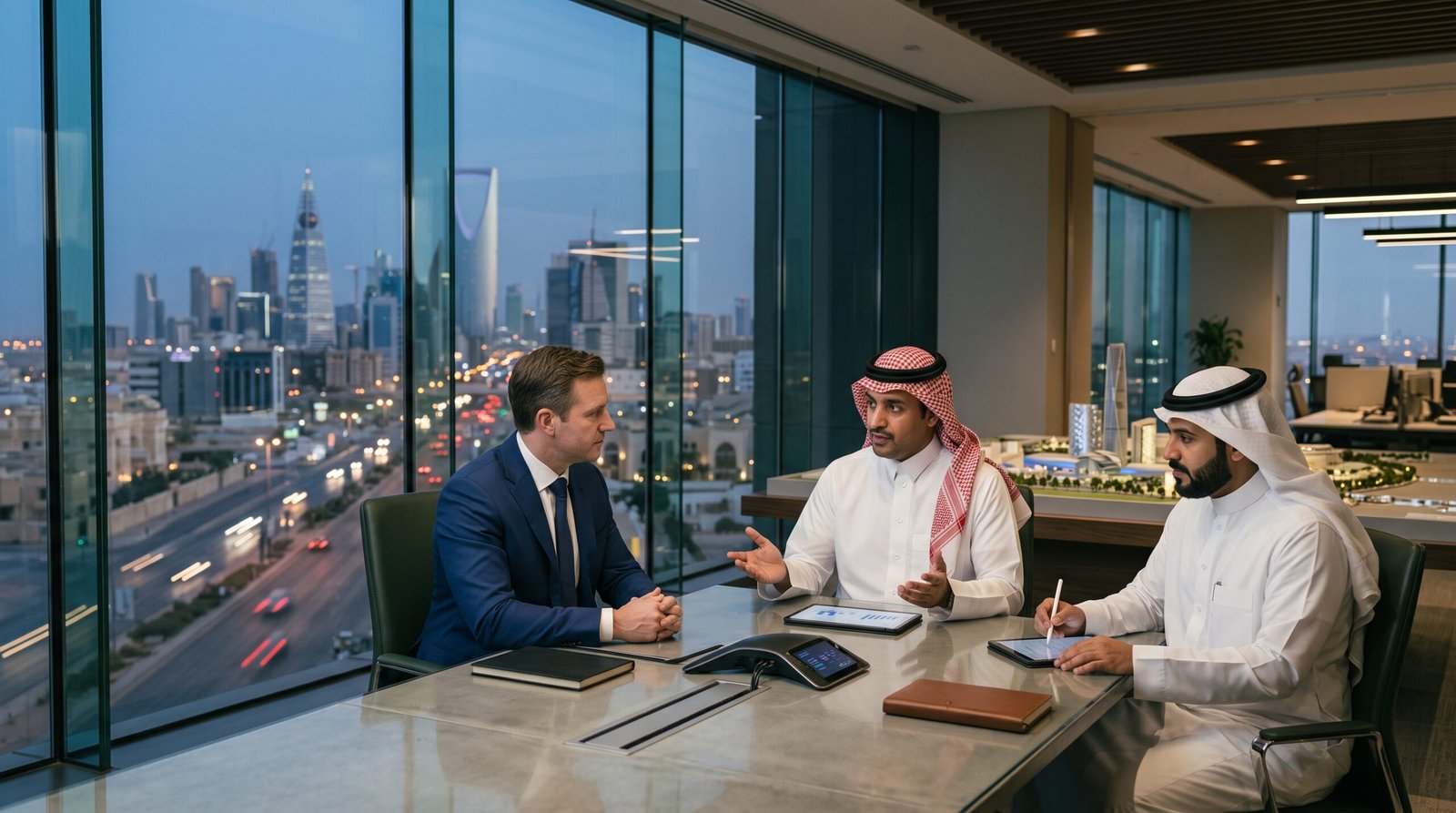
As we navigate the middle of 2026, the Saudi Arabian startup ecosystem has moved past its initial “gold rush” phase. If 2021 to 2023 were defined by record-breaking capital injections and a flurry of early-stage activity, 2026 is characterized by a sophisticated transition toward maturity. The Riyadh skyline, now a global symbol of rapid economic transformation, mirrors the underlying shift in the Kingdom’s venture capital (VC) landscape: a move from speculative growth to sustainable, exit-oriented scale.
For investors and founders across the GCC, the Saudi market is no longer just a high-potential frontier; it is the gravity center of regional liquidity. However, the rules of engagement have changed. The “growth at all costs” mantra that dominated the early 2020s has been replaced by a disciplined focus on unit economics, path-to-profitability, and localized innovation that aligns with the closing stages of Vision 2030’s primary mandates.
Understanding these emerging trends is essential for any stakeholder operating in Saudi Arabia, the UAE, Qatar, or the wider MENA region. The interplay between sovereign wealth, regulatory evolution, and a maturing secondary market is creating a unique environment that rewards strategic depth over mere speed.
The Dominance of Late-Stage Funding and the “Series B Gap” Closure
One of the most visible trends in 2026 is the narrowing of the infamous “Series B gap.” For years, Saudi startups found it easy to secure Seed and Series A funding but hit a wall when attempting to scale further. Today, the landscape has shifted. We are seeing a significant concentration of capital in late-stage rounds (Series B, C, and beyond), driven by both domestic institutional players and a renewed interest from global private equity firms.
The Public Investment Fund (PIF), through its subsidiaries like Jada Fund of Funds and Sanabil Investments, has successfully catalyzed a secondary layer of private VC firms. These local funds, which started small five years ago, now have the “dry powder” necessary to lead $50 million+ rounds. This maturity means that Saudi unicorns are no longer forced to look exclusively toward Silicon Valley or London for growth capital, keeping more control and equity within the regional ecosystem.
However, this abundance at the top has created a more rigorous environment for early-stage founders. Investors in 2026 are demanding more than just a proof of concept. They are looking for “industrial-grade” startups—those that have secured clear regulatory approvals from the Saudi Central Bank (SAMA) or the Capital Market Authority (CMA) and can demonstrate a clear moat against international incumbents.
The “Riyadh Requirement” and Regional Rebalancing
The geopolitical and economic strategy of “Program HQ” has reached its full fruition in 2026. For venture capitalists, this has fundamentally changed deal flow. We are seeing a trend where startups from Dubai, Amman, and Cairo are not just opening satellite offices in Riyadh but are effectively re-domiciling their core operations to the Kingdom to access government tenders and local VC pools.
This has led to a “Saudi-First” strategy for regional expansion. Investors are increasingly questioning the viability of startups that do not have a robust Saudi strategy by their Series A. While the UAE remains a vital hub for R&D and global connectivity, and Qatar continues to lead in specific sports-tech and energy niches, Saudi Arabia has become the primary theater for operational scaling. This regional rebalancing is fostering a more integrated GCC market, where cross-border investment is becoming the norm rather than the exception.
Sector Specialization: Beyond the Fintech Hype
While Fintech remains the largest recipient of VC funding in the Kingdom, the nature of these investments has evolved. The market for basic digital wallets and buy-now-pay-later (BNPL) services is largely saturated. In 2026, the “smart money” is flowing into more complex sub-sectors:
- Embedded Finance: Non-financial companies in the logistics and retail sectors are integrating credit and payment solutions directly into their platforms, supported by specialized VC backing.
- WealthTech and Robo-Advisory: As the Saudi middle class grows and financial literacy increases, there is a surge in startups offering automated investment tools tailored to local Sharia-compliant requirements.
- InsurTech: Long neglected, the insurance sector is seeing a wave of disruption as VCs back platforms that use AI to personalize premiums in a market that is increasingly mandating various forms of insurance.
Beyond Fintech, two other sectors have emerged as the “big bets” of 2026: DeepTech and ClimateTech. Driven by the massive requirements of giga-projects like NEOM and The Red Sea, VCs are funding startups focused on water desalination technology, hydrogen energy storage, and modular construction. These are not just “software plays”; they are capital-intensive, hardware-enabled businesses that require a different type of VC expertise—one that understands long-gestation periods and industrial integration.
The Rise of Corporate Venture Capital (CVC)
A defining feature of the Saudi ecosystem in 2026 is the maturity of Corporate Venture Capital. In the past, many Saudi corporates viewed startup investment as a CSR activity or a peripheral marketing tool. Today, CVCs are among the most sophisticated players in the market.
Entities like Aramco’s Wa’ed Ventures and Prosperity7, along with STV (backed by STC), have set a high bar. We are now seeing mid-tier Saudi conglomerates in the retail, construction, and healthcare sectors launching their own VC arms. These CVCs offer something that traditional VCs cannot: immediate market access, distribution networks, and “sandboxes” for testing products. For a startup, having a major Saudi conglomerate on the cap table is often more valuable than the cash itself, as it essentially guarantees a pilot customer.
Exit Strategies: The Nomu and Tadawul Factor
For a VC ecosystem to be sustainable, it needs exits. For the longest time, the lack of an “exit culture” was the primary criticism of the Saudi market. In 2026, this narrative has been firmly debunked. The Nomu – Parallel Market has become a vibrant destination for tech listings, providing early-stage investors with the liquidity they need to recycle capital into new ventures.
We are witnessing a trend of “Mini-IPOs,” where startups with valuations in the $100 million to $300 million range are listing on Nomu rather than waiting for a massive $1 billion exit. This provides a clear path for founders and early employees to realize value. Furthermore, the Tadawul (Main Market) is increasingly open to tech-heavy companies, as evidenced by the successful listings of several Saudi-grown digital platforms over the last 24 months.
Additionally, M&A (Mergers and Acquisitions) activity has picked up. We are seeing “exit by consolidation,” where larger Saudi startups are acquiring smaller regional players to bolster their market share before an eventual IPO. This consolidation is a sign of a healthy, self-correcting market.
The Role of Regulatory Agility
The 2026 VC landscape owes much of its stability to the proactive stance of Saudi regulators. The Ministry of Investment (MISA) has streamlined the process for foreign VCs to enter the market, while the Saudi Venture Capital Company (SVC) continues to play a pivotal role in de-risking investments for private players.
The introduction of specialized courts for commercial disputes and the continued refinement of the Companies Law have provided the legal certainty that international institutional investors require. This has led to an influx of capital from the wider GCC, particularly from family offices in Kuwait and Bahrain, who now view Saudi tech as a staple asset class in their portfolios.
Challenges and Risks: The 2026 Reality Check
Despite the optimism, the Saudi VC ecosystem faces significant headwinds in 2026. The most pressing challenge is the talent war. As hundreds of startups scale simultaneously, the demand for high-level engineering, product management, and growth marketing talent has outstripped local supply. This has driven up operational costs, forcing startups to spend a disproportionate amount of their VC funding on salaries.
There is also the risk of valuation fatigue. While the “bubble” of 2021 has largely deflated, some Saudi startups still carry valuations that are difficult to justify based on current revenue. If the global macro-environment shifts or oil prices face significant volatility, there could be a painful correction for startups that haven’t reached break-even.
Furthermore, the heavy reliance on government-linked funding remains a double-edged sword. While it provides stability, it can also lead to “crowding out” where private investors feel they cannot compete with sovereign-backed funds, or startups become too reliant on government contracts rather than building true market demand.
The AI Integration Wave
In 2026, “AI” is no longer a buzzword in the Saudi VC world; it is a prerequisite. However, the trend has shifted from Generative AI hype to Applied AI. VCs are prioritizing startups that use machine learning to solve specific Saudi-centric problems—such as optimizing logistics in the mountainous Asir region, managing water scarcity in agricultural sectors, or providing localized Arabic NLP (Natural Language Processing) for the Kingdom’s unique dialects.
The Saudi Data and AI Authority (SDAIA) has created an environment where startups can access massive datasets, making Riyadh a testing ground for AI applications that can later be exported to the rest of the Islamic world and the Global South. This “AI-Sovereignty” movement is attracting significant VC interest, as it aligns with the Kingdom’s goal of becoming a top-15 global AI leader.
What Should GCC Investors and Founders Watch Next?
As we look toward the end of 2026 and into 2027, several key indicators will determine the next phase of the Saudi startup ecosystem:
- The Secondary Market for VC Stakes: Watch for the emergence of dedicated platforms that allow private investors to trade stakes in pre-IPO Saudi startups. This will bring a new level of liquidity to the market.
- Cross-Border GCC Mergers: Expect to see more “mergers of equals” between Saudi and UAE-based startups as they realize that scale is the only way to compete with global giants.
- The Gaming and Esports Vertical: With the massive investments from the Savvy Games Group, a whole sub-ecosystem of game developers, streaming platforms, and esports infrastructure startups is reaching VC-readiness.
- The “Green” Mandate: As Saudi Arabia prepares for the next decade of its energy transition, VC funding for Circular Economy startups—those focusing on recycling, waste management, and sustainable materials—is expected to skyrocket.
“The Saudi startup ecosystem has evolved from a series of disconnected experiments into a high-performance engine. In 2026, the question for investors is no longer ‘Why Saudi?’ but ‘How fast can we deploy?'”
Practical Considerations for Stakeholders
For entrepreneurs, the message is clear: 2026 is the year of the “Professional Founder.” The era of raising millions on a pitch deck alone is over. You need a path to profitability, a deep understanding of Saudi regulatory frameworks, and a talent strategy that goes beyond local borders.
For investors, the opportunity lies in the niches that support the giga-projects. While consumer tech is crowded, B2B industrial tech, PropTech, and specialized logistics are underserved. Due diligence must be more rigorous than ever, focusing on the quality of the cap table and the reality of the “Saudi-first” execution.
For foreign investors, the entry barriers have never been lower from a regulatory perspective, but the competition has never been higher. Partnering with local VCs who have “boots on the ground” in Riyadh is no longer optional; it is a strategic necessity to navigate the nuances of the local business culture and government relations.
The Road Ahead
The transformation of the Saudi startup ecosystem toward 2026 is a testament to the power of aligned national vision and capital. What we are seeing is the birth of a “New Normal” for the GCC—a region that doesn’t just consume technology but builds and funds it at a global scale. While challenges remains, particularly regarding talent and global macro-volatility, the structural foundations of the Saudi VC market have never been stronger.
As we move toward 2030, the startups being funded today in Riyadh and Jeddah will likely become the regional blue-chips of tomorrow. The focus now is on execution, integration, and the continued pursuit of exits that prove the Saudi venture model is not just a temporary phenomenon, but a permanent fixture of the global financial landscape.