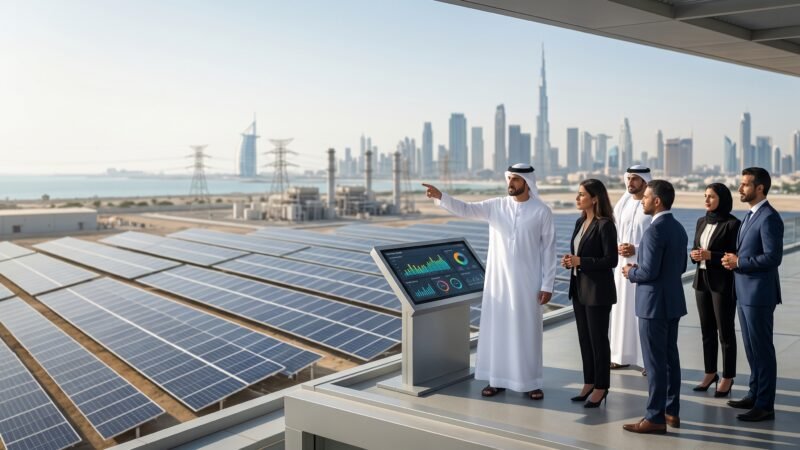
The Gulf Cooperation Council (GCC) countries are the world’s most important oil and gas exporters — yet they are also emerging as major investors in clean energy. The region’s energy transition is driven by a simple logic: monetise hydrocarbons while they remain valuable, and build the next energy economy in parallel.
Net-Zero Pledges Across the Gulf
- UAE — first in the region to commit to net zero by 2050.
- Saudi Arabia — net zero by 2060, with a 50% renewable electricity target by 2030.
- Oman and Bahrain — net zero by 2050 and 2060 respectively.
- Qatar — no formal net-zero pledge yet, but significant investments in solar and LNG efficiency.
Solar at World-Record Prices
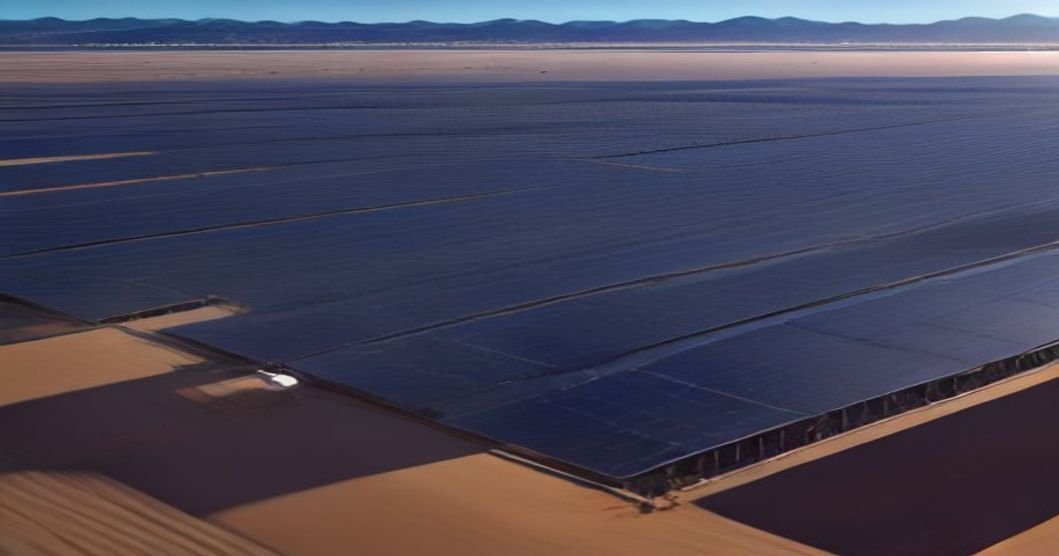
The Gulf’s abundant sunshine has produced some of the world’s cheapest solar power. The Mohammed bin Rashid Al Maktoum Solar Park in Dubai, the Al Dhafra plant in Abu Dhabi and Saudi Arabia’s Sudair and Sakaka projects have set record-low tariffs. Saudi Arabia is targeting around 130 GW of renewable capacity by 2030.
Green Hydrogen: The Next Big Bet
The region is betting heavily on green hydrogen — produced from renewable electricity — as a future export fuel. The flagship project is the NEOM Green Hydrogen Company in Saudi Arabia, billed as the world’s largest, targeting production from 2026. Oman is also positioning itself as a green hydrogen export hub.
Nuclear and Carbon Capture
The UAE operates the Barakah nuclear plant, the Arab world’s first, providing up to a quarter of the country’s electricity. Meanwhile, Saudi Arabia and the UAE are investing in carbon capture, utilisation and storage (CCUS) and low-carbon LNG to reduce emissions from their hydrocarbon operations.
What It Means for Business
The energy transition is opening entirely new value chains in the Gulf: solar EPC, battery storage, green hydrogen production and transport, grid modernisation, and carbon management. For contractors, technology providers and investors, the Gulf’s clean-energy build-out is one of the world’s largest infrastructure opportunities.
Conclusion
The Gulf is not abandoning oil — it is diversifying ahead of the curve. The countries that once built their wealth on hydrocarbons are now positioning themselves as exporters of renewable energy, green hydrogen and clean technology, making the energy transition one of the defining business stories of the region.